Chapter 1: Origins and Outbreak (Before 1914)
Long-Term Causes
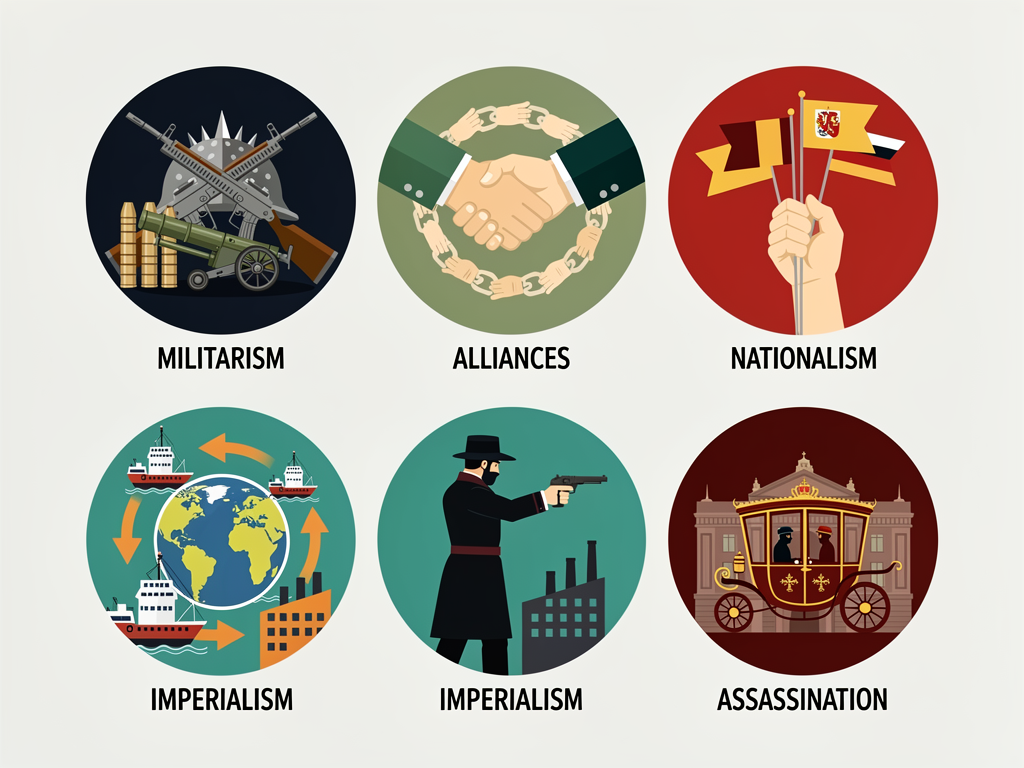
Historians often summarise WWI’s origins as MANIA:
- Militarism – arms races, glorification of war
- Alliances – rigid blocs (Triple Alliance, Triple Entente)
- Nationalism – intense rivalries, imperial pride
- Imperialism – competition for colonies
- Assassination – Sarajevo 1914 as trigger
Key idea: Structural tensions make Europe a “powder keg”; the assassination provides the spark.
Alliance Systems
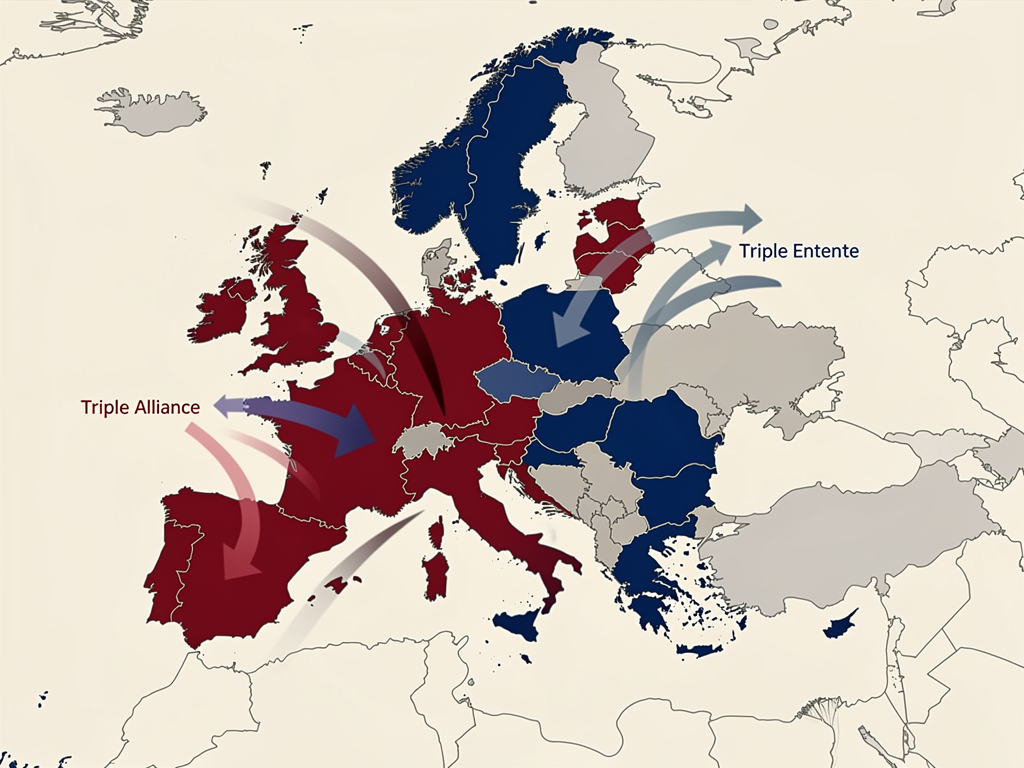
By 1914, Europe polarises into:
- Triple Alliance: Germany, Austria-Hungary, Italy
- Triple Entente: Britain, France, Russia
These are defensive on paper, but:
- Encourage risky diplomacy
- Turn local crises into bloc confrontations
Concept: The alliance system creates a chain-reaction mechanism—once one state mobilises, others follow.
Nationalism and Empire
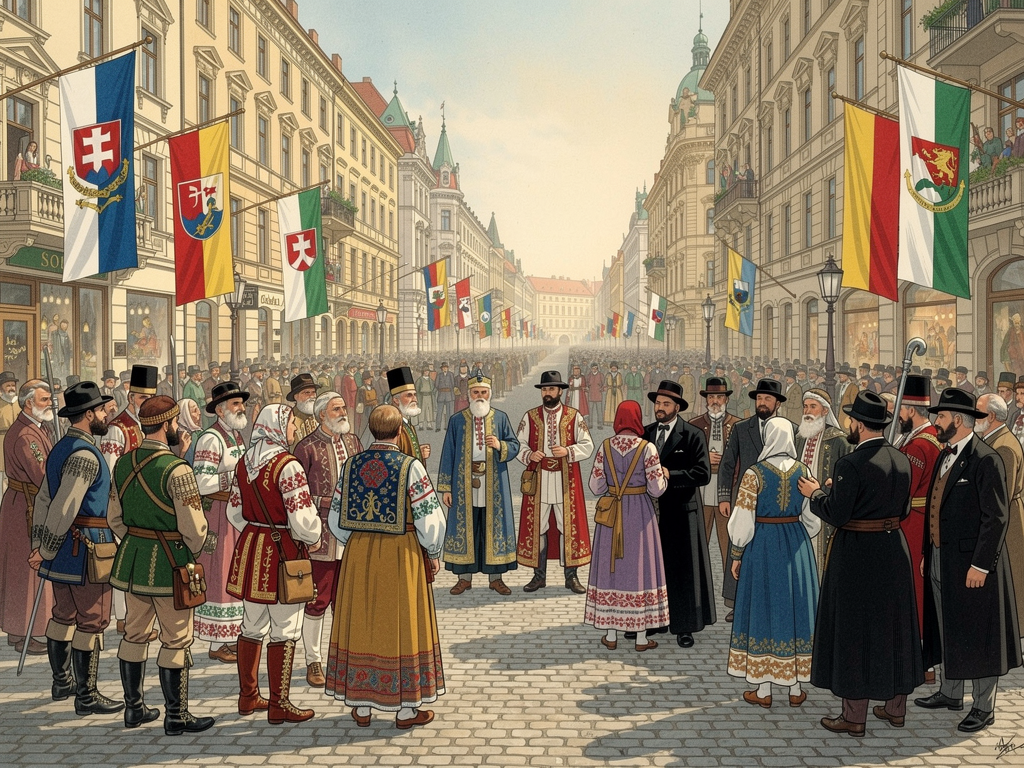
Nationalism operates on two levels:
- Great-Power nationalism: German Weltpolitik, French revanche, British naval pride
- Minority nationalism: Serbs, Czechs, Poles seeking self-determination
Austria-Hungary and the Ottoman Empire fear disintegration.
Imperial rivalries (e.g., in Africa, Asia) deepen distrust, especially between Britain, France, and Germany.
The July Crisis 1914
Sequence after Archduke Franz Ferdinand’s assassination:
1. Austria-Hungary issues harsh ultimatum to Serbia
2. Russia backs Serbia
3. Germany offers Austria a “blank cheque”
4. General mobilisation plans activate
5. Declarations of war cascade
Key term: July Crisis—a diplomatic breakdown where rigid timetables and misperceptions overpower restraint.
Responsibility Debate 🧠
Historians disagree on war guilt:
- Fritz Fischer: German elites pursue expansionist war
- Others stress shared miscalculation, structural pressures
Contemporary Article 231 (Versailles) blames Germany and allies.
Critical skill: Distinguish between immediate decisions and underlying systems when assigning responsibility.
💡 This is just Chapter 1. The full content with all chapters, interactive quizzes, and progress tracking is available in the Octo AI app.