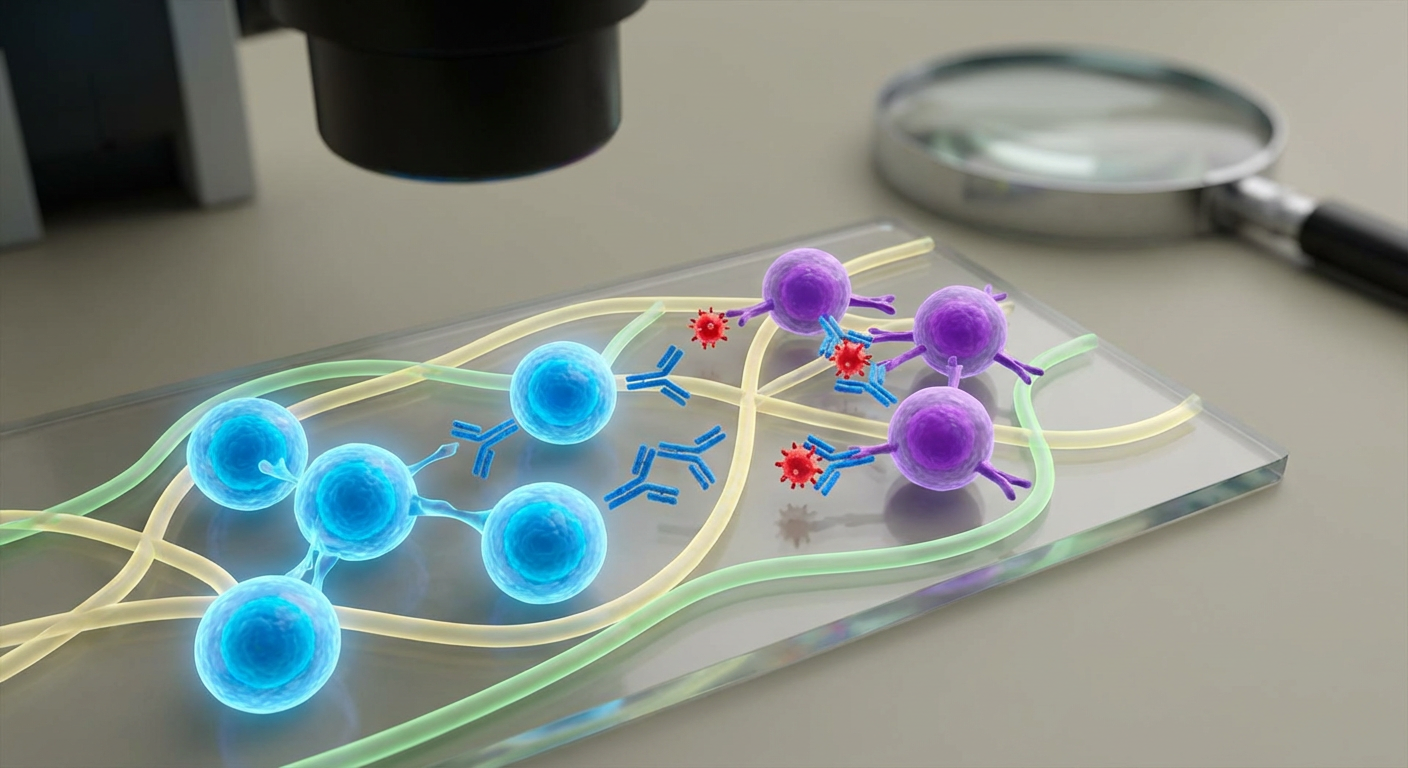
Vaccines manipulate the adaptive immune system, which remembers specific pathogens.
Key components:
Antigens: molecular structures recognized as foreign
Lymphocytes: B and T cells that target antigens
Antibodies: proteins that bind and neutralize antigens
After infection, some lymphocytes become memory cells, enabling faster, stronger responses to later encounters. Vaccines exploit this memory without causing full-blown disease.
Adaptive immunity: slower at first, highly specific (B and T lymphocytes)
Innate responses buy time; adaptive responses eliminate particular pathogens. Vaccines specifically train the adaptive branch, so when the pathogen appears naturally, the response is rapid and targeted, often preventing symptoms entirely.
Immunological Memory
A primary response (first exposure) is slow: antibodies appear after days, with modest levels.
A secondary response (later exposure) is:
Faster
Higher in antibody concentration
More sustained
This improvement arises from memory B and T cells generated during the first encounter. Vaccines aim to create this memory safely, so natural infection is handled as a secondary, not primary, challenge.
Antigens and Epitopes
Vaccines present antigens, but immune cells actually recognize smaller regions called epitopes.
One antigen can contain many epitopes
Different people may respond to different epitopes
This diversity helps populations resist rapidly evolving pathogens. However, it also explains why some individuals respond weakly and why vaccine design must consider antigenic variation (e.g., influenza strain changes).
💡 This is just Chapter 1. The full content with all chapters, interactive quizzes, and progress tracking is available in the Octo AI app.