Chapter 1: What Was the Silk Road?
A Web of Routes, Not One Road
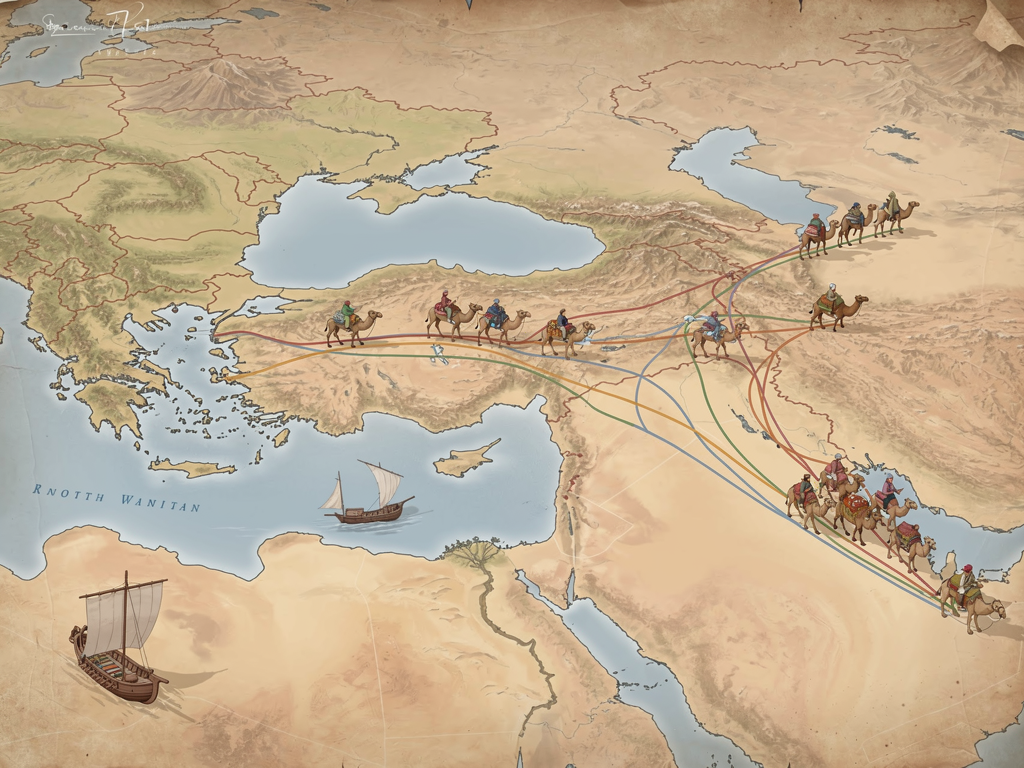
The Silk Road was a network of trade routes connecting China, Central Asia, the Middle East, and Europe.
- Active: about 200 BCE–1500 CE
- Main goods: silk, spices, glass, horses, paper
- Main users: merchants, pilgrims, diplomats, soldiers
It was mostly overland, with caravans crossing deserts and mountains, plus some sea routes.
Key idea: The Silk Road spread things, ideas, and diseases, not just silk.
Why "Silk" Was So Special 🐛
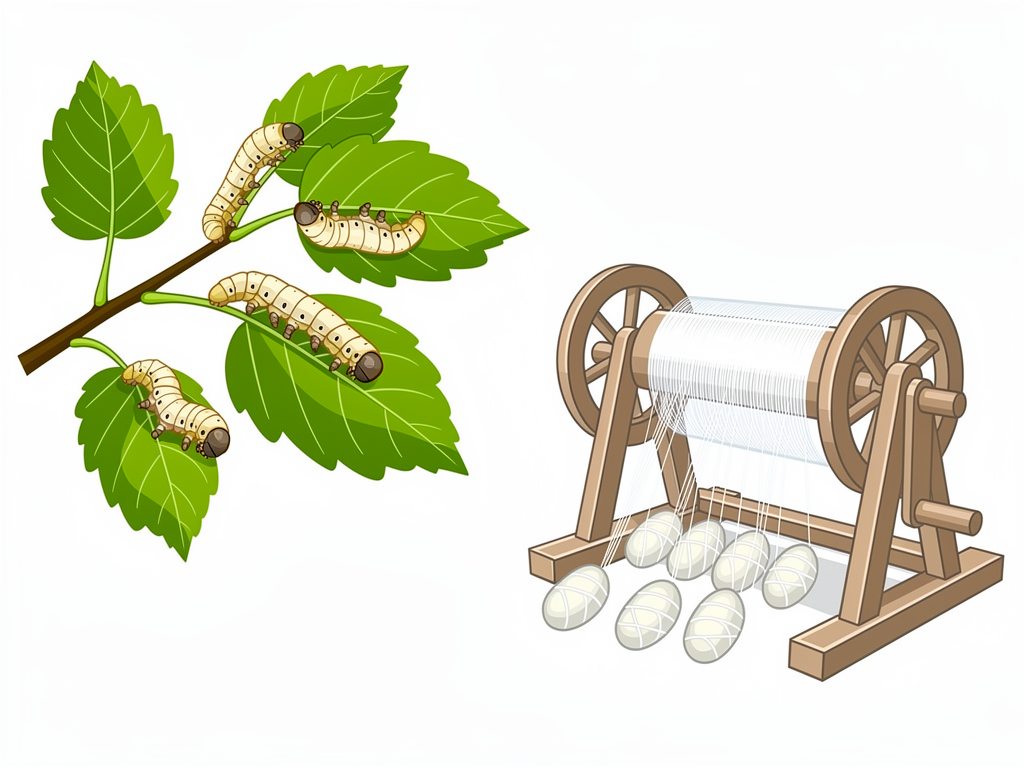
Chinese silk was:
- Soft and light
- Strong and shiny
- Very hard to make and a state secret
To Romans and other western buyers, silk felt luxurious and exotic. It was worth its weight in gold.
Because silk was small but valuable, merchants could carry it far across deserts and mountains and still make profit.
The Geography Challenge 🏜️⛰️
The Silk Road crossed:
- The Taklamakan Desert ("you go in, don’t come out")
- The Gobi Desert
- The Tien Shan and Himalayan mountains
Travel was slow and dangerous because of:
- Extreme heat and cold
- Sandstorms and avalanches
- Bandits and wild animals
These risks made traded goods expensive but also highly desired.
Who Traveled the Silk Road?
Not just merchants:
- Caravan leaders and camel drivers
- Interpreters and guides
- Buddhist monks, Christian missionaries, and Muslim scholars
- Envoys and spies serving kings and emperors
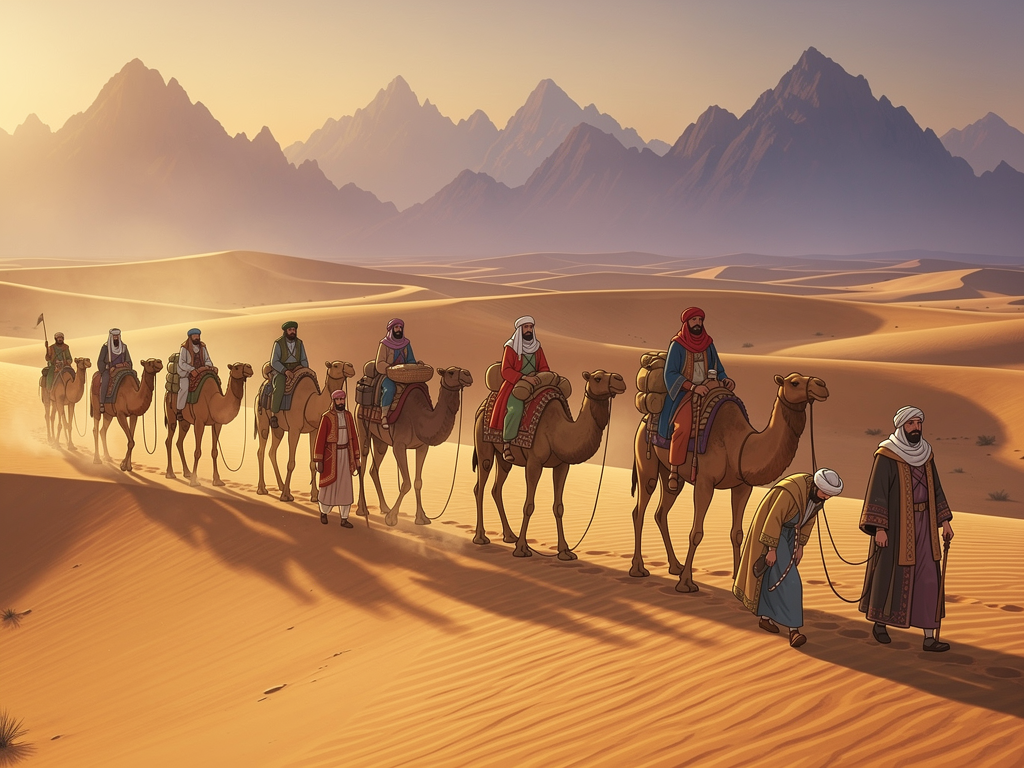
They moved in caravans for safety, often with dozens of camels.
Every traveler carried stories, beliefs, and skills, turning the route into a moving classroom.
💡 This is just Chapter 1. The full content with all chapters, interactive quizzes, and progress tracking is available in the Octo AI app.