Chapter 1: Worlds Connected by Silk
What Is the Silk Road?
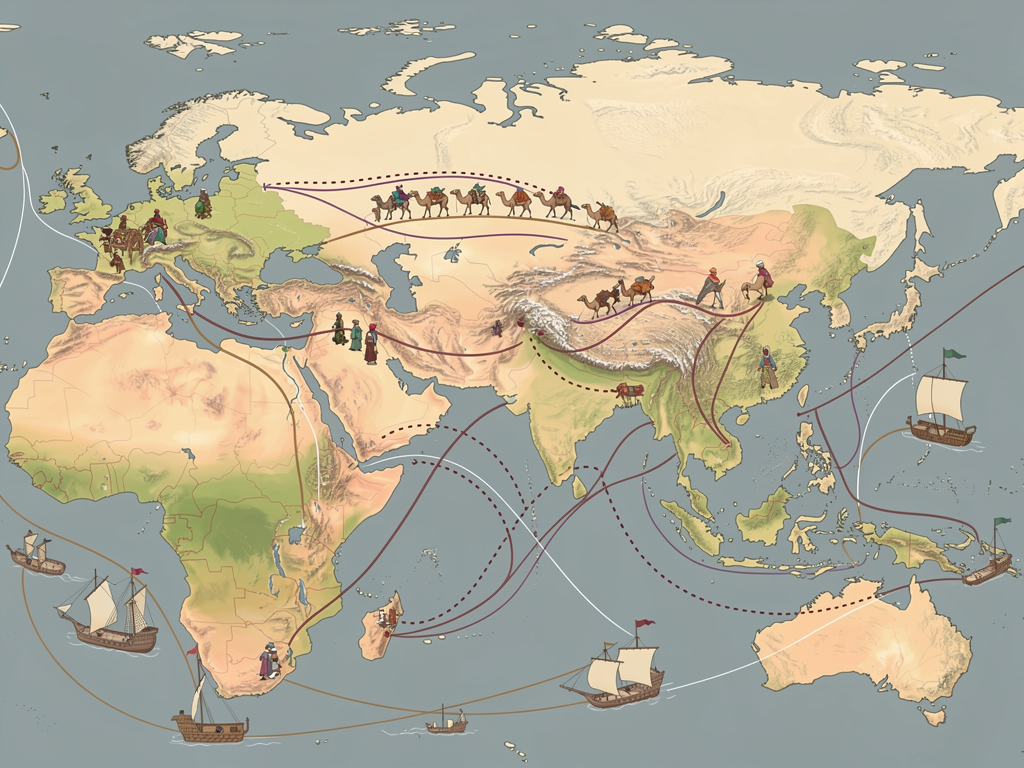
The Silk Road is not a single road, but a web of overland and maritime routes linking China, Central Asia, the Middle East, and Europe.
- Active roughly 2nd century BCE–15th century CE
- Named for Chinese silk, a luxury export
It enables intense exchange of goods, ideas, religions, and diseases, profoundly reshaping Afro-Eurasian history.
Geography and Environment 🌏
Key environmental zones:
- East Asia: Loess plains, river valleys
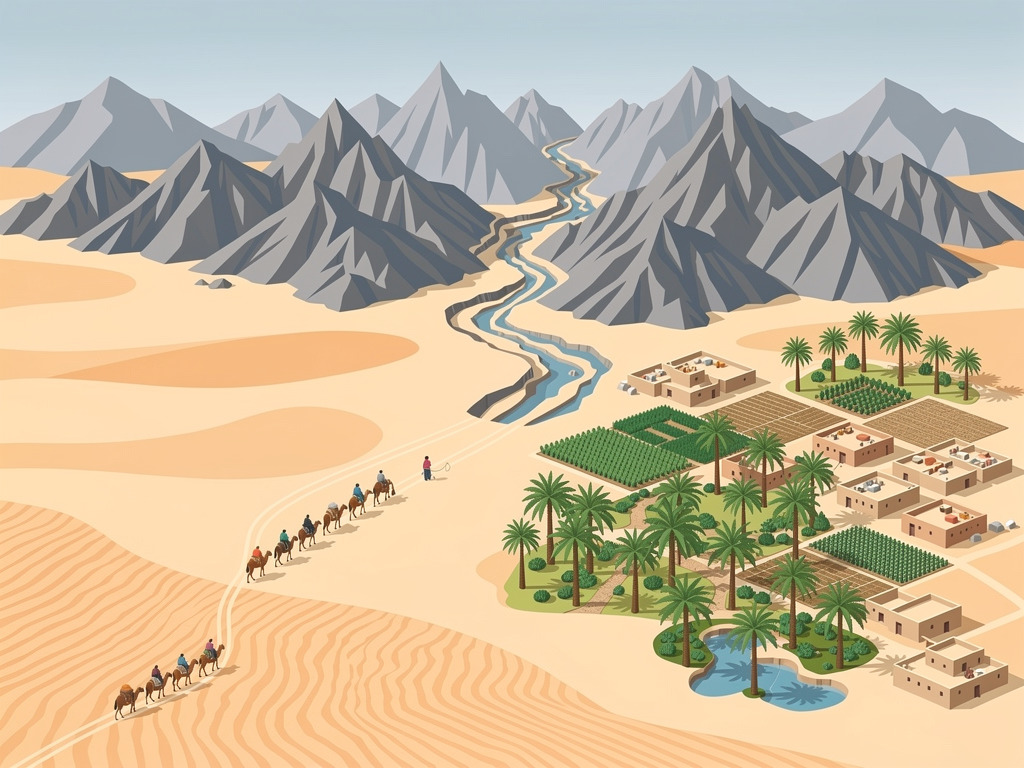
- Central Asia: Deserts (Taklamakan), highlands, oases
- Middle East: Iranian plateau, Mesopotamia
- Mediterranean: Sea-based trade hubs
Caravans move between oases and caravanserais, skirting harsh deserts and mountain passes like the Pamir and Tien Shan ranges.
Major Corridors
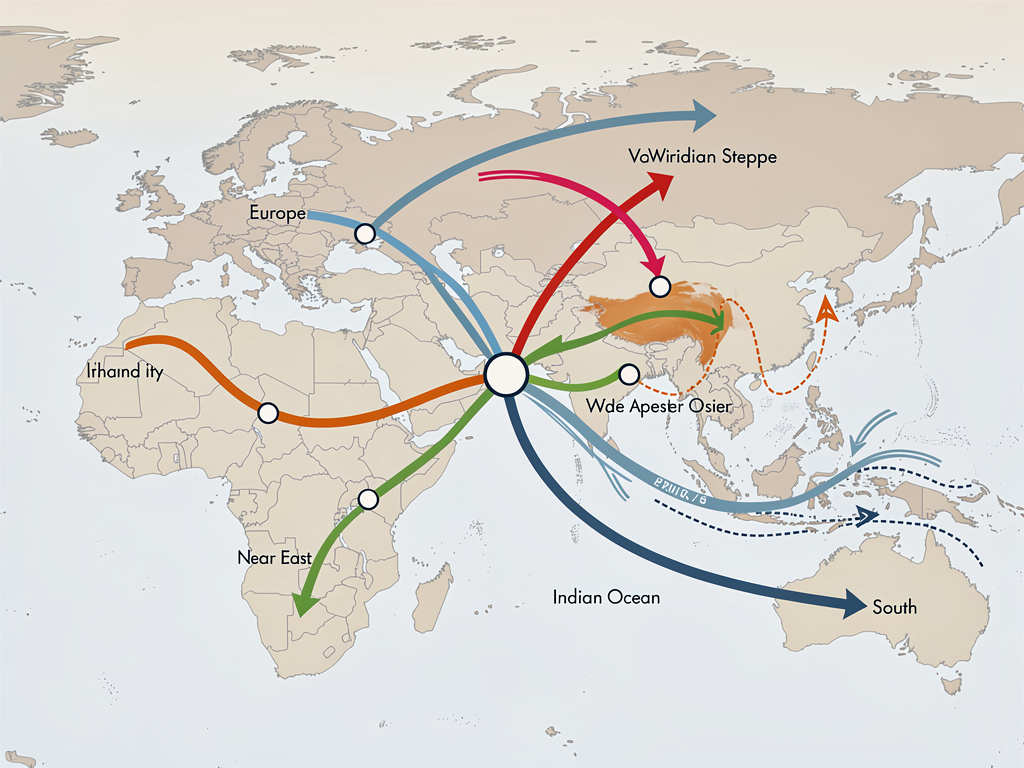
Historians distinguish several overlapping branches:
1. Northern Steppe Route (through nomadic zones)
2. Tarim Basin Oasis Route (around Taklamakan)
3. Iranian and Mesopotamian Routes
4. Maritime Silk Road via Indian Ocean ports
Together, they form an integrated Afro-Eurasian network, not an isolated pathway.
Key Political Powers
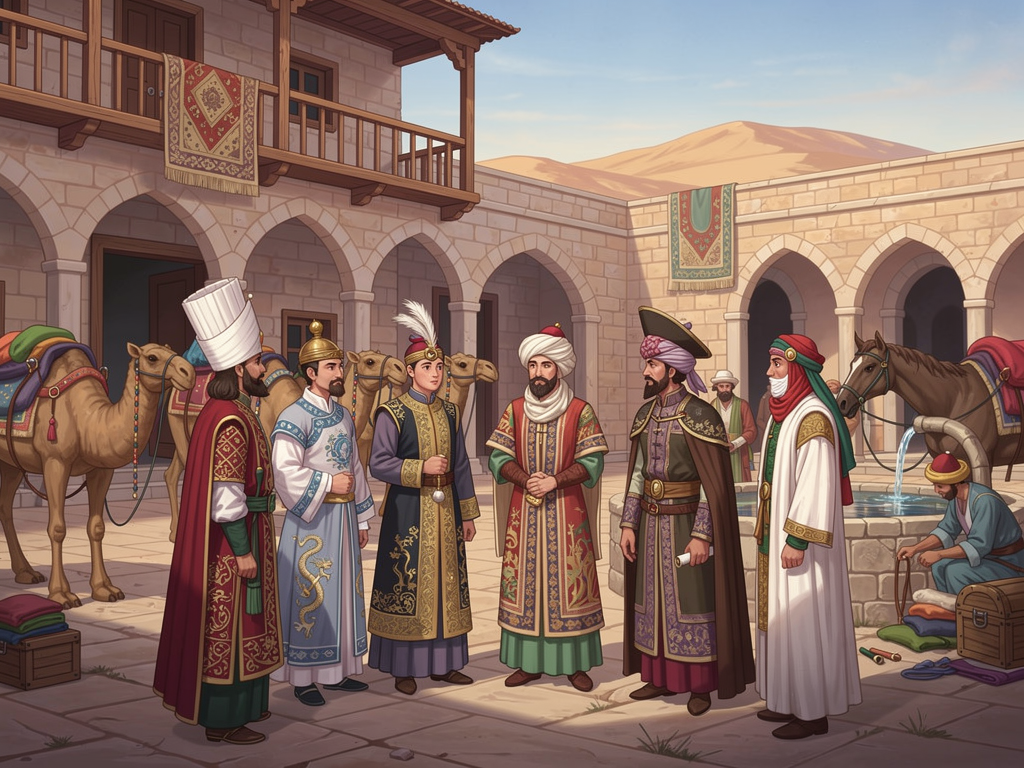
The network thrives when large empires stabilize routes:
- Han and Tang China
- Kushan Empire in Central Asia
- Sasanian and later Islamic Caliphates
- Byzantine Empire
- Mongol Empire (Yuan, Ilkhanate)
These states tax caravans, police routes, and sometimes wage commercial warfare over access.
💡 This is just Chapter 1. The full content with all chapters, interactive quizzes, and progress tracking is available in the Octo AI app.