Chapter 1: Defining the Renaissance
What Is the Renaissance?
The Renaissance is a cultural “rebirth” in Europe, roughly 1350–1600, following the crises of the late Middle Ages.
- Revival of classical Greek and Roman ideas
- Flourishing of arts, sciences, and literature
- First emerging in Italian city-states
It does not mean sudden progress everywhere, but uneven, intersecting transformations in thought, institutions, and daily life.
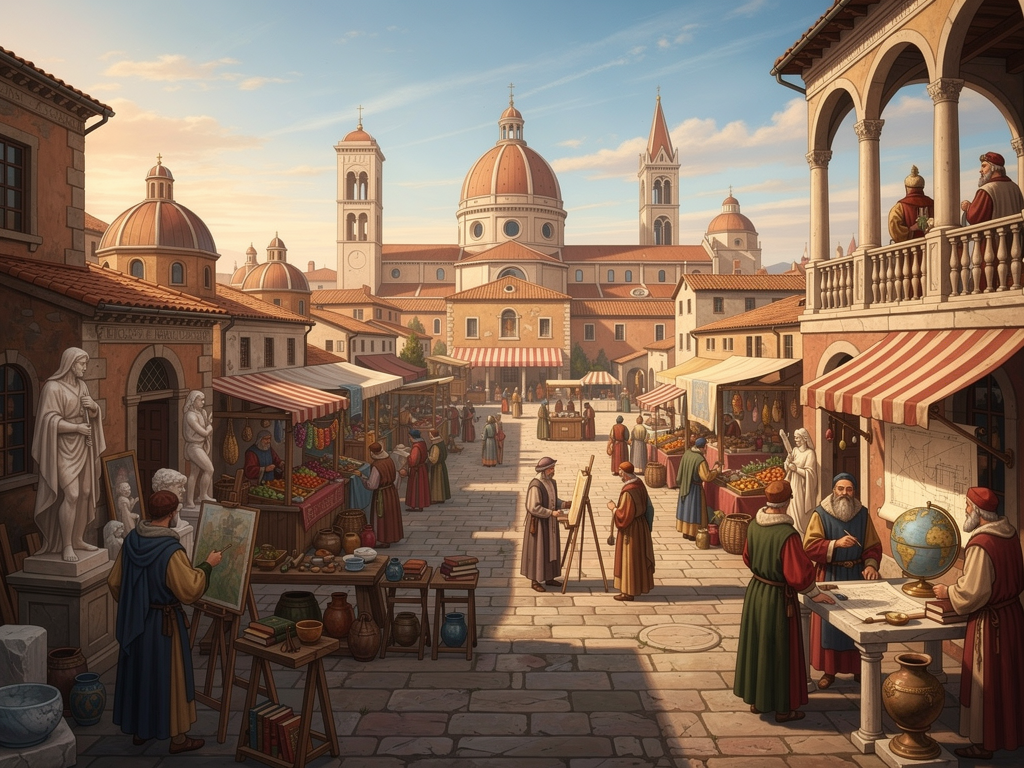
Key Features
Renaissance culture is often described through three overlapping shifts:
1. Humanism – focus on human capacities and classical learning
2. Individualism – emphasis on personal fame, achievement, and authorship
3. Secularization – more worldly subjects alongside theology
These trends reshape education, politics, and the arts, while Christianity remains central.

Why Italy First? 🇮🇹
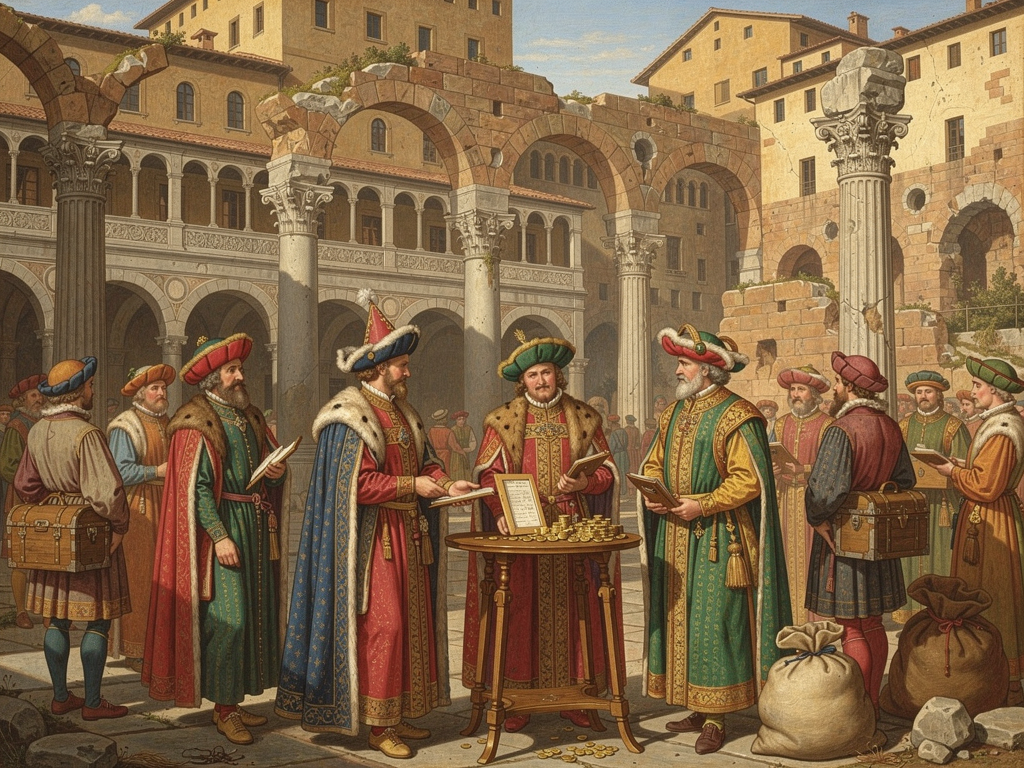
Italian city-states provided fertile ground:
- Wealthy merchants (e.g., Medici) funding art and scholarship
- Urban competition between Florence, Venice, Rome
- Surviving Roman ruins inspiring classicism
- Banking and trade networks spreading ideas
The result: dense artistic patronage, humanist schools, and experimental politics.
Periodization Debates
Historians dispute:
- Exact dates: some start with Petrarch (14th c.), others with 15th-century Florence
- Geographic scope: Italy only, or all Europe?
- Break vs. continuity: abrupt “new age” or gradual evolution from medieval culture?
Understanding the Renaissance requires questioning simplistic timelines or labels like “Dark Ages.”
Renaissance vs. Middle Ages
Often contrasted as:
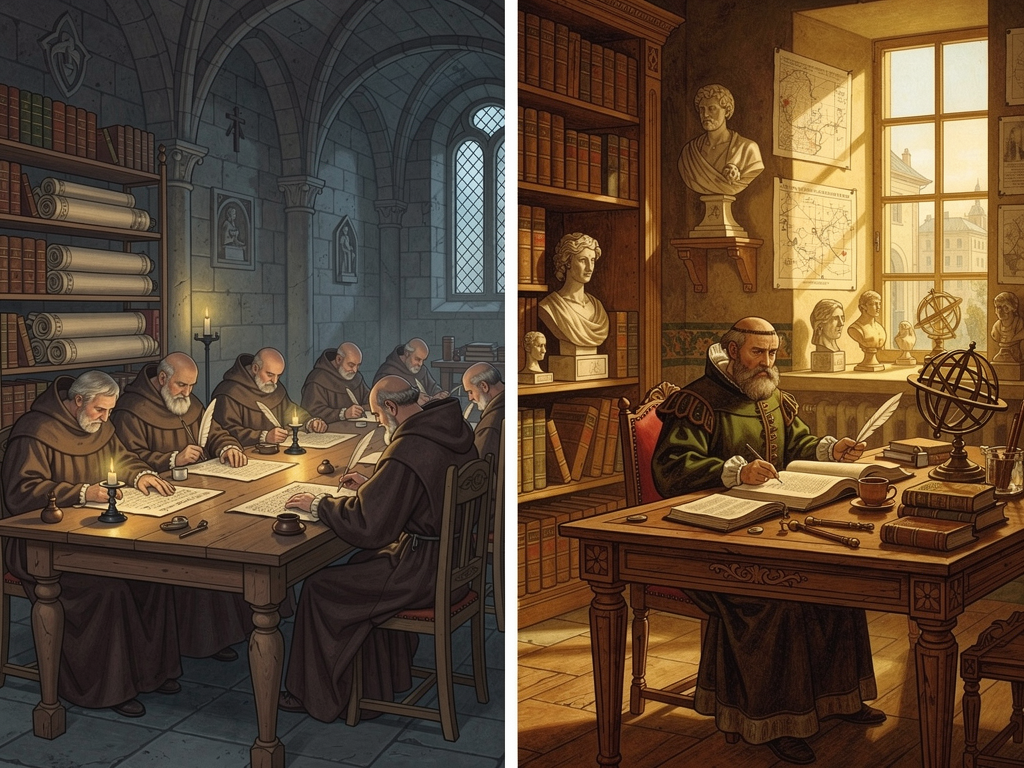
- Medieval: scholastic, theocentric, Latin, hierarchical
- Renaissance: humanist, worldly, vernacular, experimental
Yet continuities are strong:
- Universities, Church structures, and Latin literacy persist
- Many humanists are devout Christians
Think of the Renaissance as reorientation, not total rupture.
💡 This is just Chapter 1. The full content with all chapters, interactive quizzes, and progress tracking is available in the Octo AI app.