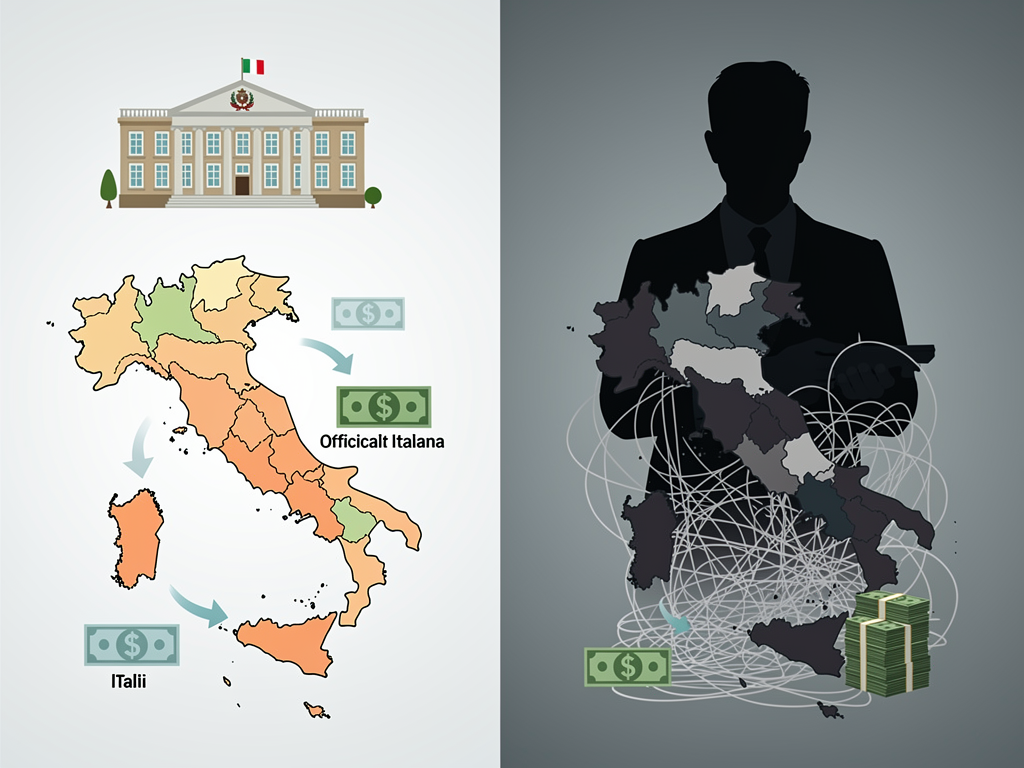
The Italian Mafia refers to several criminal organizations rooted in Italy that blend violence, ritual, and economic enterprise.
Key features:
Illegal markets: drugs, extortion, gambling
Territorial control over communities
Parallel governance where the state is weak
They present themselves as protectors or honor-based brotherhoods, but their core logic is profit, power, and social control.
The Idea of Cosa Nostra
Cosa Nostra literally means “our thing.”
Core principles:
Secrecy (omertà): silence toward authorities
Loyalty: obedience to bosses over the state
Family structure: bosses, underbosses, soldiers
> The Mafia functions like a clandestine corporation with its own rules, rituals, and internal justice system.
Social and Historical Roots
Italian mafias emerge in contexts of:
Weak or absent state authority
Landowner-peasant conflicts
Need for protection in rural economies
In 19th‑century Italy, local strongmen offered private protection and dispute resolution, gradually institutionalizing into mafias. They exploit distrust of official institutions and embed themselves in everyday life.
Key Mafia Concepts
Protection racket: charging for “protection” from violence, often their own
Omertà: cultural norm against informing authorities
Code of honor: justifies violence as “necessary” or “deserved”
Infiltration: penetration of legal markets and politics
These concepts help mafias legitimize themselves while maintaining fear and dependency.
💡 This is just Chapter 1. The full content with all chapters, interactive quizzes, and progress tracking is available in the Octo AI app.