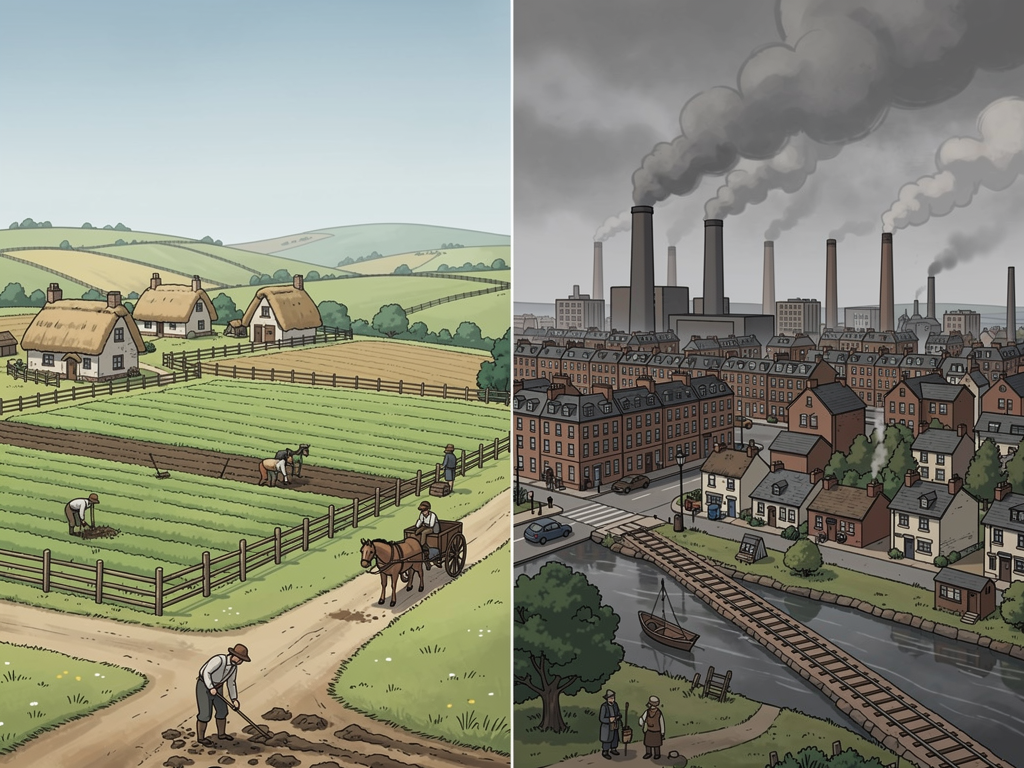
In the 1700s, most Europeans lived in rural villages and worked in agriculture.
Goods made by hand at home (the cottage system)
Power mainly from muscles, wind, and water
Transport by horse, sail, or simple roads
Life was local and slow-changing. The Industrial Revolution suddenly shifted work, technology, and daily life.
What Is the Industrial Revolution?
The Industrial Revolution is a period (about 1750–1850) when machines, factories, and new energy sources transformed production.
Key ideas:
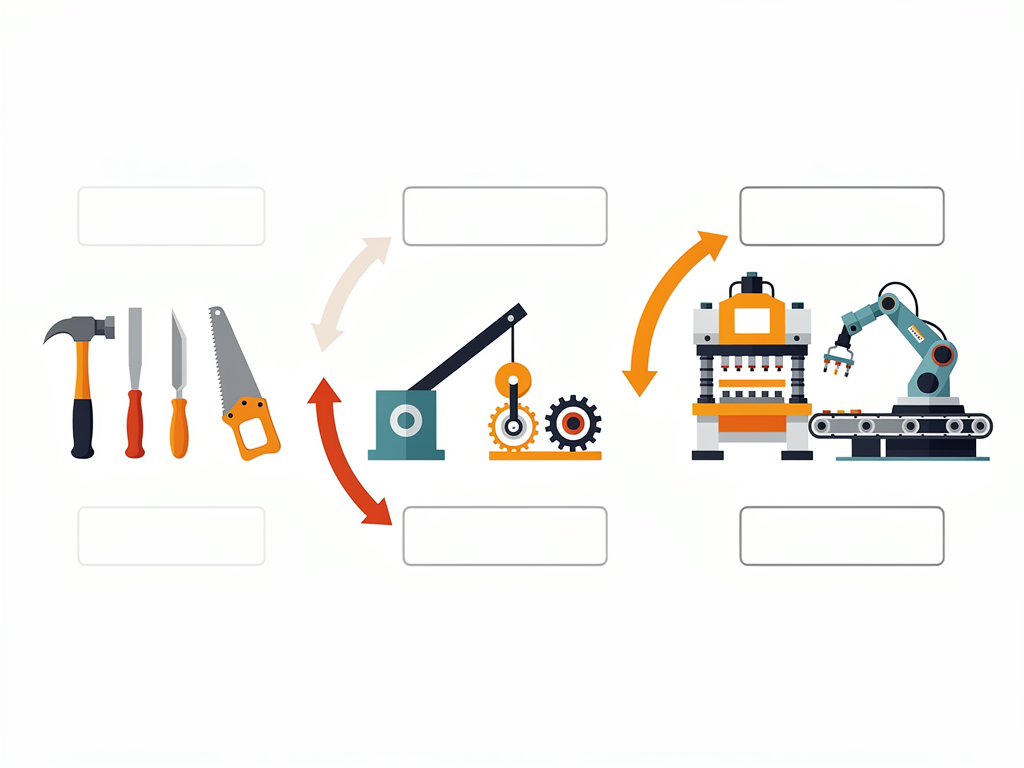
Replacing hand tools with machines
Moving work from homes to factories
Using steam and later coal-powered engines
It begins in Britain and spreads to Europe, North America, and beyond.
Why Britain First? 🇬🇧
Several advantages help Britain industrialize early:
Natural resources: coal and iron
Rivers and ports for transport
Growing population supplying workers and buyers
Capital (money) from trade and empire
Stable government protecting property and business
These factors make Britain a perfect place to test new machines and factory systems.
Key Inventions (Early Phase)
Some inventions massively boost production:
Spinning Jenny: spins many threads at once
Water frame: water-powered spinning
Power loom: mechanized weaving
Flying shuttle: faster weaving
Result: cloth becomes cheaper, production speeds up, and demand for raw cotton rises sharply. This pushes further changes in farming, slavery, and global trade.
💡 This is just Chapter 1. The full content with all chapters, interactive quizzes, and progress tracking is available in the Octo AI app.