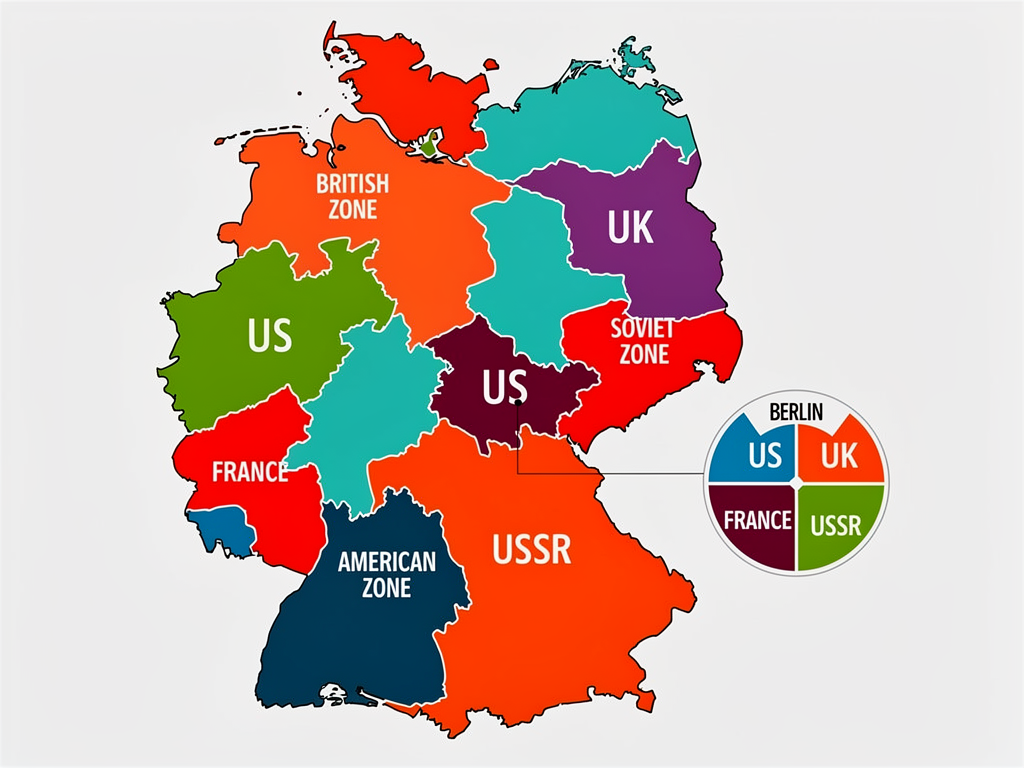
After World War II, Germany is split into four occupation zones:
🇺🇸 United States
🇬🇧 Britain
🇫🇷 France
🇷🇺 Soviet Union
Berlin, the capital, lies deep in the Soviet zone but is also divided into four sectors.
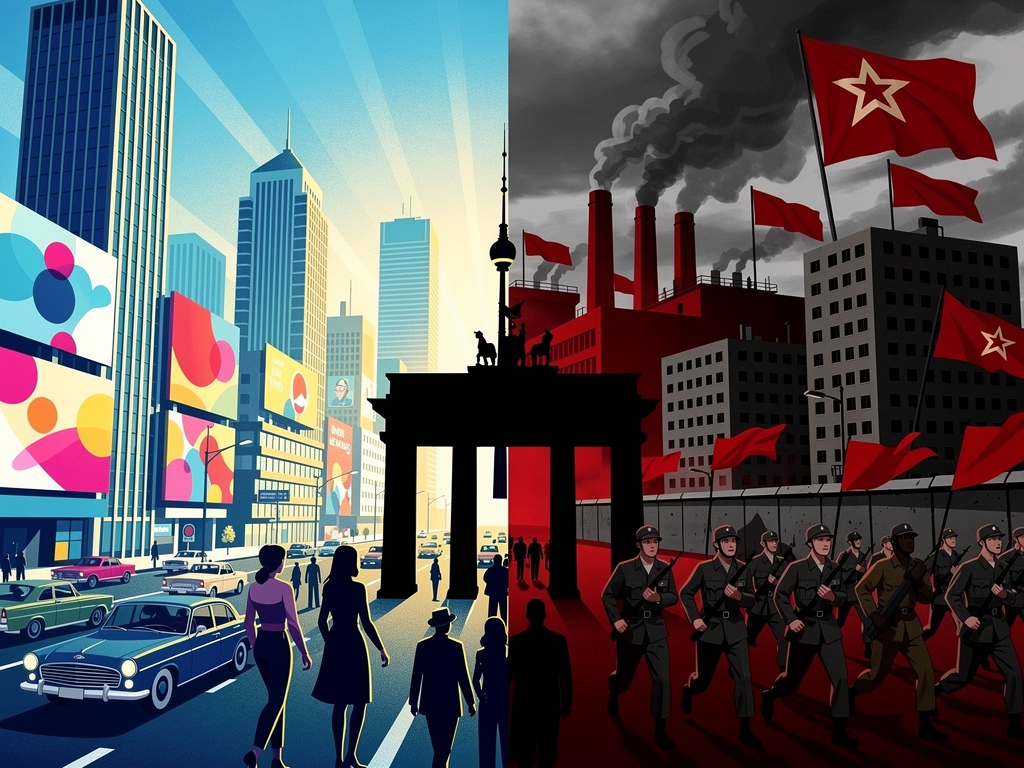
This creates a strange situation: Western-style areas exist inside the communist East. Tension between the Soviet Union and the Western Allies turns into the Cold War. Berlin becomes its most visible hotspot.
Two Germanys, Two Systems
In 1949, the zones become two countries:
FRG: Federal Republic of Germany (West Germany), democratic, capitalist
GDR: German Democratic Republic (East Germany), communist, one-party rule
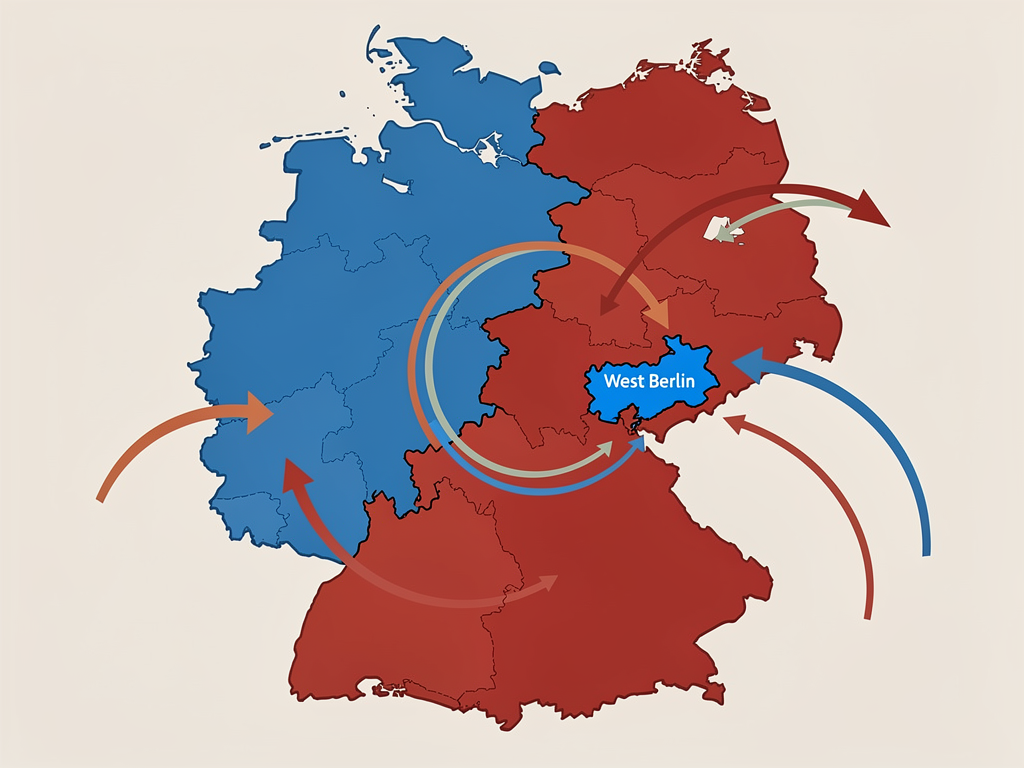
West Berlin is linked to West Germany, even though it’s inside East Germany. East German leaders fear people will leave East for West. The border around West Berlin is still open, so millions escape through the city.
Why People Fled East Germany
Many East Germans move West because:
Higher wages and consumer goods
More political freedom
Better travel options
East Germany loses especially young, educated workers. This is called a “brain drain”. By 1961, about 2.7 million people have left. East German and Soviet leaders decide: the open Berlin border must be sealed to save their system.
The Cold War Context ❄️
The Berlin problem fits a bigger struggle:
USA and allies: capitalism, elections, open markets
USSR and allies: communism, state control, one-party rule
Both sides fear the other will expand. Berlin is more than a city; it’s a symbol. Whoever controls it seems to prove their system is stronger.
💡 This is just Chapter 1. The full content with all chapters, interactive quizzes, and progress tracking is available in the Octo AI app.