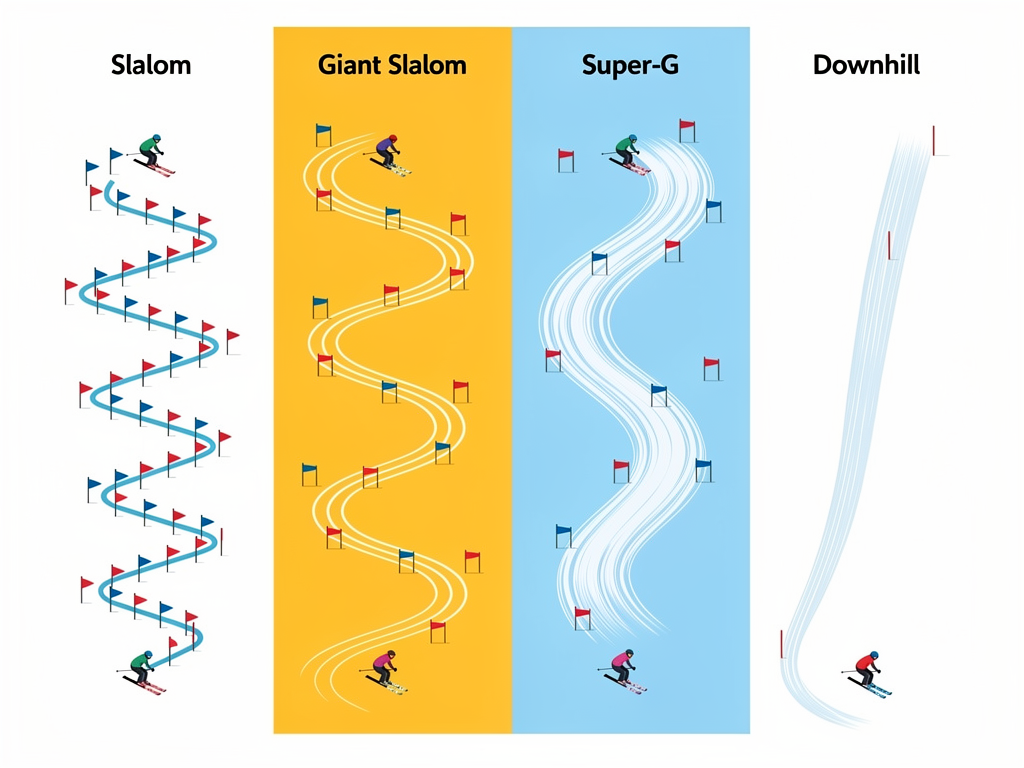
Super-G (Super Giant Slalom) is an alpine skiing race.
Very high speed
Fewer, wider turns than slalom
More turning than downhill
It mixes speed and technical skill. Skiers race one at a time, trying to get the fastest time down the course. Missing a gate or crashing means disqualification, so skiers must balance risk vs. control.
Austrian alpine skier Christoph Kornberger during the FIS-Super-G race in Spital am Semmering, Austria on 11 March 2008.
Christian Jansky
How Super-G Fits In
From most turns to fewest turns:
1. Slalom
2. Giant slalom
3. Super-G
4. Downhill
Super-G is called a “speed event” because racers reach very high speeds, but they still need strong turning skills. It sits between giant slalom (more technical) and downhill (fastest, straightest).
Single-Run Pressure
In major races, Super-G usually has only one run.
No second try
Any mistake is final
This adds huge mental pressure. Skiers must attack confidently, but one late turn, missed line, or small slip can ruin their time. Visualization and course inspection become very important.
💡 This is just Chapter 1. The full content with all chapters, interactive quizzes, and progress tracking is available in the Octo AI app.