Chapter 1: Defining Slavery and Core Concepts
What Is Slavery?
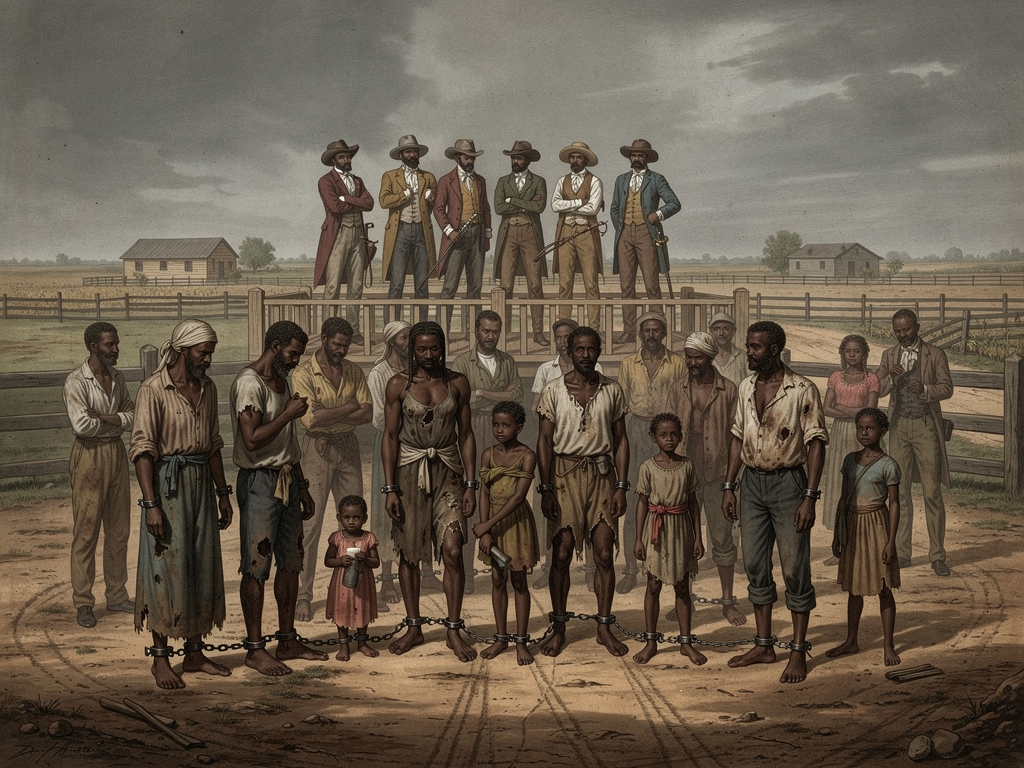
Slavery is a system where people are treated as property, denied freedom, and forced to work under coercion.
Key elements:
- Loss of legal personhood
- Violence or threat of violence
- No right to leave or refuse work
Slavery differs from harsh labor because the enslaved person’s body, time, and often descendants are owned.
Legal vs. Social Status
Enslaved people usually lack:
- Civil rights (to testify, own property, marry formally)
- Bodily autonomy (subject to sale, punishment, sexual violence)
Yet they develop families, cultures, and resistance strategies.
Slavery is both a legal status and a social condition that shapes identity, community, and power.
Key Terms to Know 📚
- Chattel slavery: People owned as movable property
- Serfdom: Unfree peasants tied to land, not fully owned
- Indentured servitude: Contract labor for fixed years
- Enslaver: Person or institution holding others in bondage
Using precise terms avoids romanticizing or minimizing unfreedom.
Coercion and Violence
Slavery depends on coercion:
- Physical punishment
- Threat of sale or separation
- Legal penalties for escape
> Slavery persists only when resistance is met with overwhelming force.
Violence is not incidental; it is structural, embedded in law, custom, and economic interest.
💡 This is just Chapter 1. The full content with all chapters, interactive quizzes, and progress tracking is available in the Octo AI app.