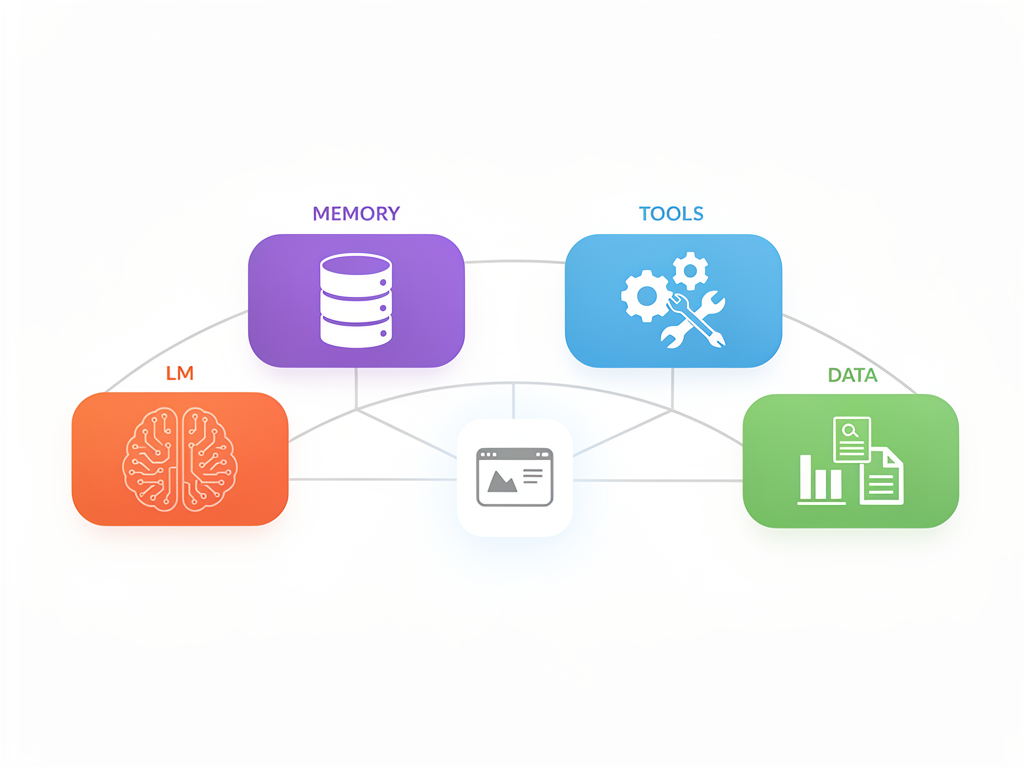
LangChain is a toolkit for building apps powered by large language models (LLMs) like ChatGPT.
It helps you:
Connect LLMs to data 📚
Break tasks into steps
Remember past interactions
Think of it as LEGO blocks for AI apps: you snap pieces together instead of coding everything from scratch.
Why Not Call The API Directly?
Calling an LLM once is easy.
Real apps need more:
Multiple steps
Tool use (search, database)
Memory of the user
Error handling
LangChain gives standard patterns for these, so you avoid rewriting glue code every time.
HarmonyOS desktop interface
Sulfur 45m 5
Core Ideas You’ll Learn
In this course you explore:
1. LLM and Chat Models
2. Prompt templates
3. Chains and Runnables
4. Memory
5. Tools and agents
6. Retrieval-Augmented Generation (RAG)
Each is a reusable piece for smarter AI apps.
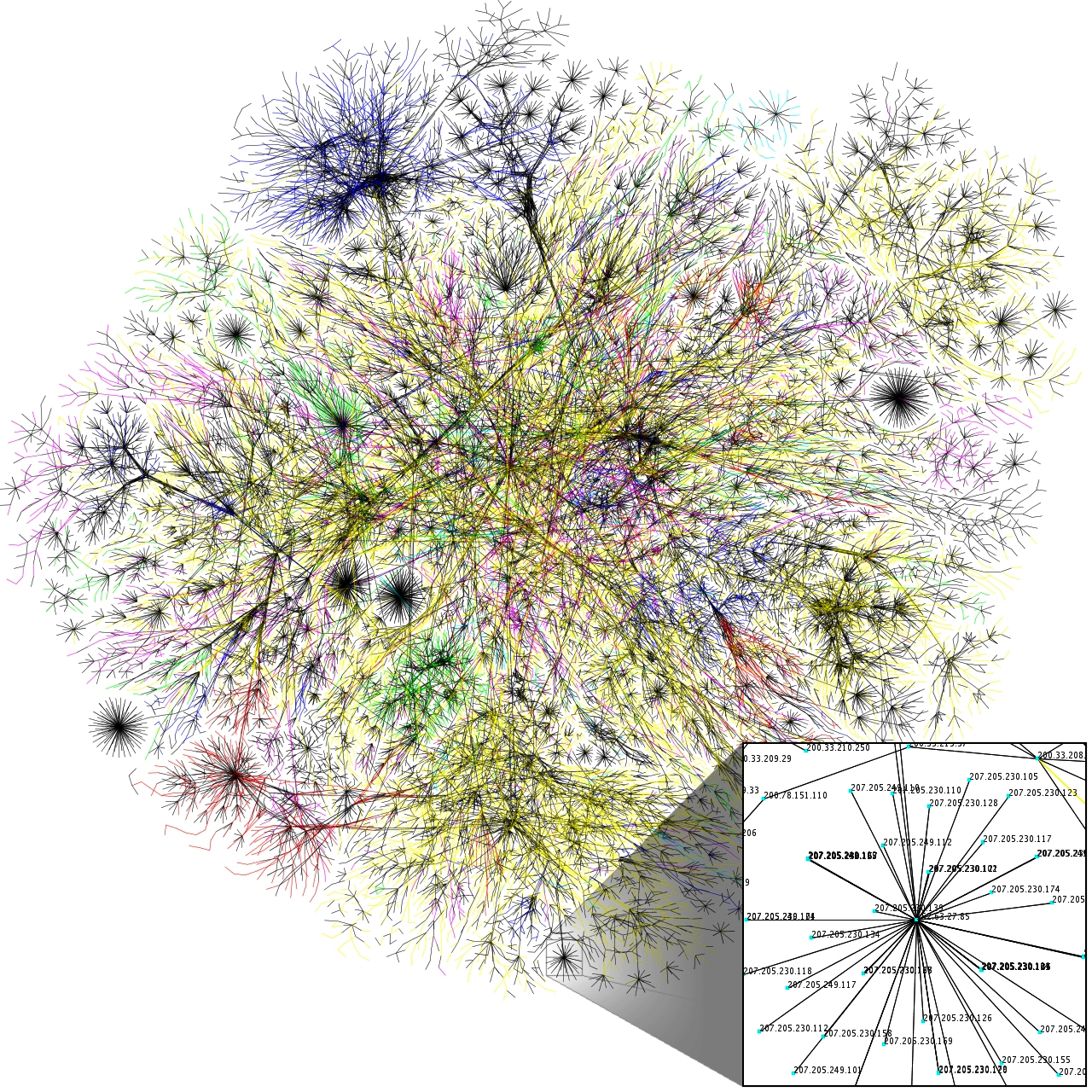
Partial map of the Internet based on the January 15, 2005 data found on opte.org. Each line is drawn between two nodes, representing two IP addresses. The length of the lines are indicative of the delay between those two nodes. This graph represents less than 30% of the Class C networks reachable by the data collection program in early 2005. Lines are color-coded according to their corresponding RFC 1918 allocation as follows: net, ca, us com, org mil, gov, edu jp, cn, tw, au, de uk, it, pl, fr br, kr, nl unknown
The Opte Project
💡 This is just Chapter 1. The full content with all chapters, interactive quizzes, and progress tracking is available in the Octo AI app.