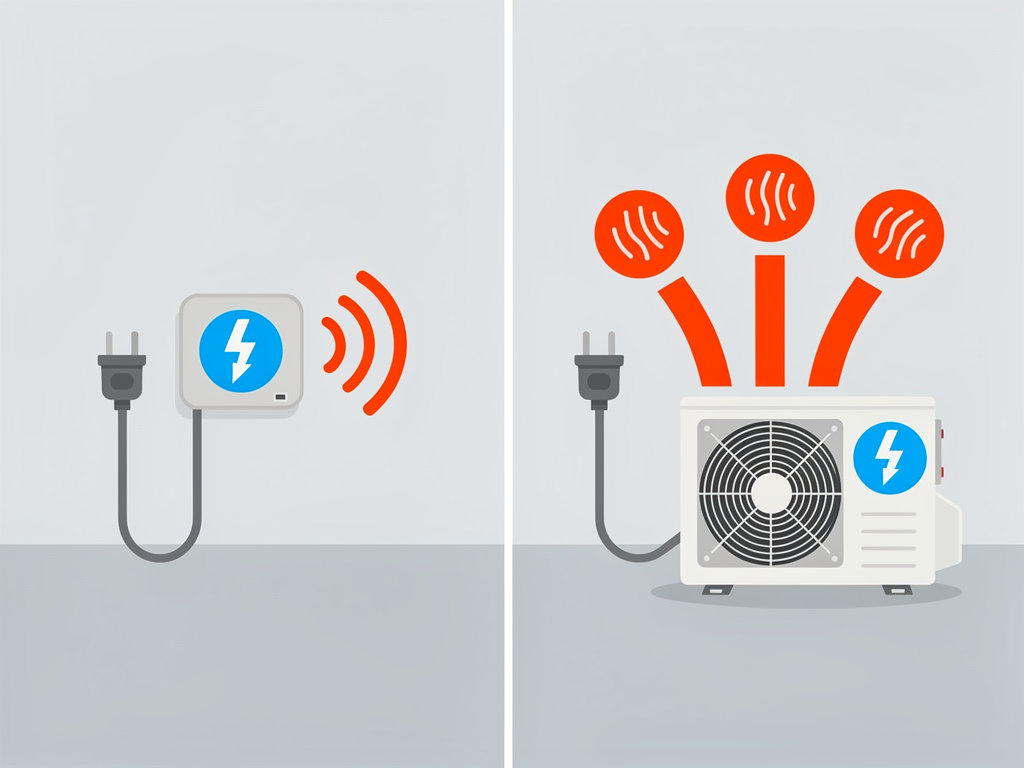
A heat pump is a machine that moves heat from one place to another.
Instead of burning fuel to make heat, it transfers existing heat, even from cold air or ground.
Works for heating and cooling
Uses electricity, not flames
Can save a lot of energy
Key idea: It’s like a smart, reversible fridge for your whole home.
Heat pump unit
Wikideas1
Everyday Examples
You already know machines that act like heat pumps:
Refrigerator: moves heat from food to your kitchen
Air conditioner: moves heat from your room outside
A home heat pump can:
Work like an AC in summer 😎
Work like a heater in winter 🔥
It just reverses the direction the heat flows.
An open domestic refrigerator with food and drink at night.The photo is stacked for focus and light from five photos.The only light source used is the normal lamp in the fridge. The fridge in an Electrolux, model ERB34253W with a net volume of 188 litres (6.6 cu ft).The fridge contains four eggs, a green bell pepper, a jar of chili, three bottles of grapefruit soda, three cans of coconut milk, three bottles of pear cider, a bottle of carbonated water, a bottle of soy sauce, a plate of sliced ham, a container with butter, a round cheese, a jar of sliced, pickled cucumber, a pitcher with crushed, roasted cacao beans, two lemons, some tomatoes, a box with grapes, carrots, yellow onions and oranges. The fridge is in Brastad, Lysekil Municipality, Sweden.
W.carter
Why Not Just Use a Heater?
Regular electric heaters turn electricity directly into heat. Efficiency: about 100%.
A heat pump can move 2–4 times more heat than the electrical energy it uses.
1 unit of electricity → 2–4 units of heat
Less pollution (if electricity is clean)
Lower bills over time
That’s why heat pumps are called high-efficiency systems.
Main Parts at a Glance
A typical heat pump has:
Evaporator: picks up heat
Condenser: releases heat
Compressor: squeezes refrigerant
Expansion valve: lets it expand and cool
A special fluid called refrigerant carries heat around this loop.
These four parts create a closed system that never “uses up” refrigerant (unless there’s a leak).
RSS Refrigerator electronics and electronics
N-Lange.de
💡 This is just Chapter 1. The full content with all chapters, interactive quizzes, and progress tracking is available in the Octo AI app.