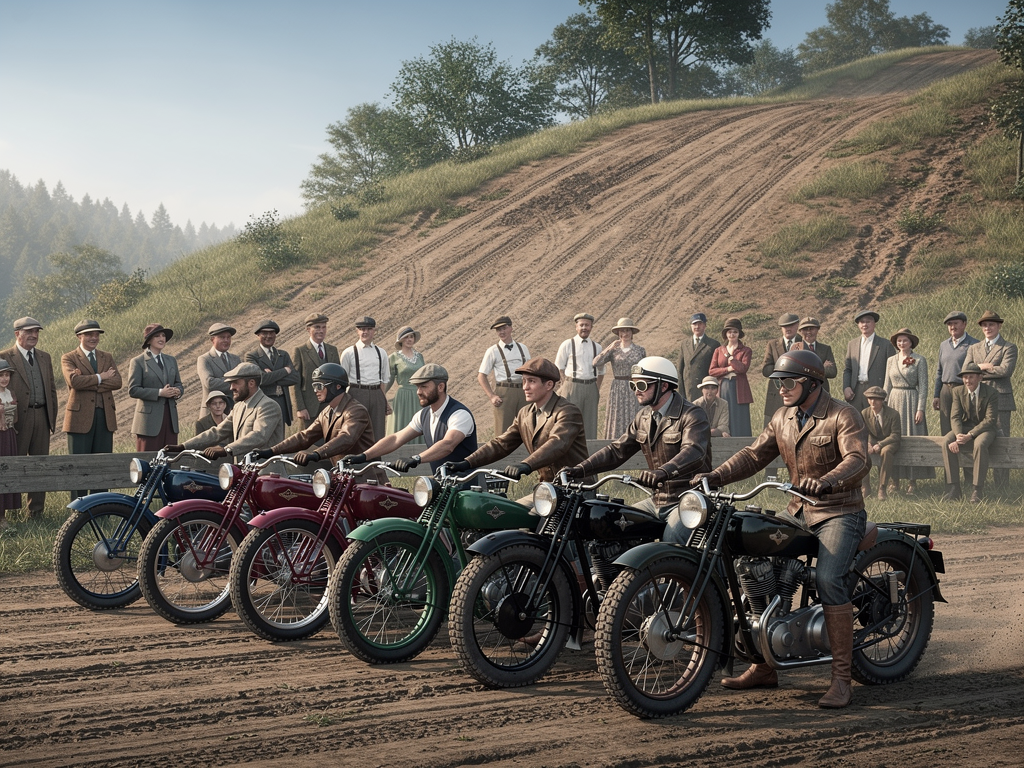
Harley-Davidson begins in 1903 in a small Milwaukee shed. William S. Harley and the Davidson brothers adapt bicycles with engines, chasing speed and reliability.
By 1909, the V-twin engine defines the brand’s sound and silhouette.
> A backyard experiment becomes an industrial identity.
Harley’s early success rests on:
Mechanical robustness
Rapid prototyping
Alignment with America’s expanding road culture
Skyline of Milwaukee 2024
Isaac Rowlett
Industrial Expansion
During the 1910s–1920s, Harley-Davidson transforms from workshop to mass producer.
Key developments:
Purpose-built factories
Dealer networks across the U.S.
Standardized parts for easier repair
The company positions motorcycles as tools, not toys—ideal for mail delivery, police work, and commercial errands.
This pragmatic framing makes Harley respectable transport rather than fringe hobby equipment.
War and Legitimacy
World War I becomes a massive accelerator. Harley provides thousands of bikes to the U.S. military.
Consequences:
Field-tested durability
Trained veteran riders returning home
Government contracts funding innovation
Motorcycles gain legitimacy as serious machines, not novelties.
This entanglement with state power foreshadows Harley’s recurring role in conflicts and policing.
Interwar Culture
In the 1920s–30s, Harley engages emerging motor culture:
Hill climbs and endurance races prove reliability
Police departments adopt Harleys for traffic control
Branded clubs foster loyalty and shared identity
Motorcycling becomes a subculture defined by risk, mechanical competence, and camaraderie—values Harley carefully cultivates in catalogs and advertising.
💡 This is just Chapter 1. The full content with all chapters, interactive quizzes, and progress tracking is available in the Octo AI app.