Chapter 1: Origins and Early Innovation
From Workshop to Worldwide Name
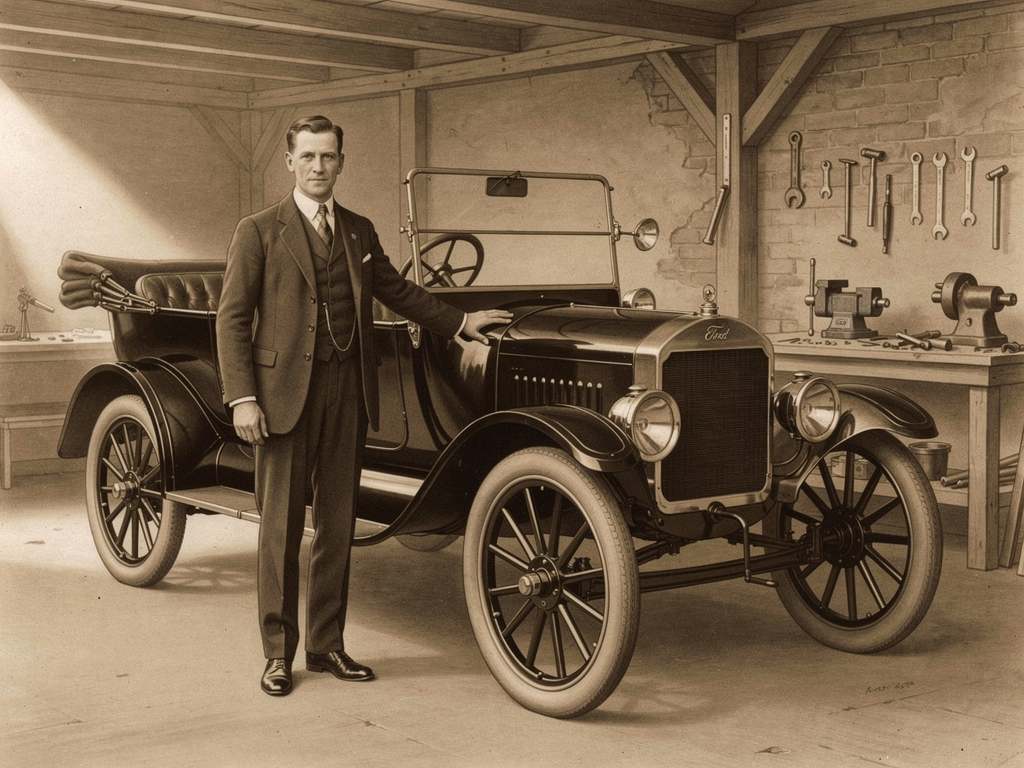
Ford Motor Company is founded in 1903 in Detroit. Henry Ford’s goal is bold: build reliable, affordable cars for ordinary Americans.
Key early features:
- Focus on standardized parts
- Emphasis on mechanical simplicity
- Strategic use of publicity through races
Ford is not the first automaker, but it becomes the one that turns the automobile from a luxury good into a mass product.
The Model T Revolution 🚙
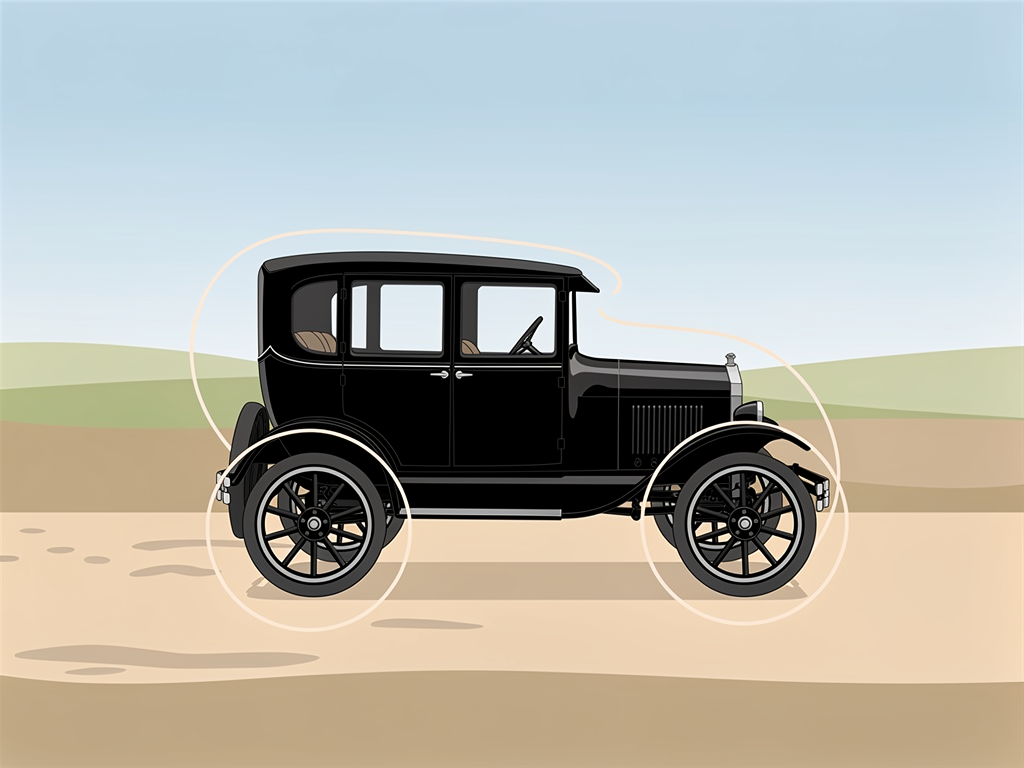
Launched in 1908, the Model T becomes Ford’s breakthrough car.
Why it matters:
- Rugged enough for rough rural roads
- Simple to repair with basic tools
- Designed for high-volume production
Economic impact:
- Drastically lowers per‑mile transport costs
- Expands labor mobility and commuting
- Stimulates related industries: steel, rubber, oil, roads
The Moving Assembly Line
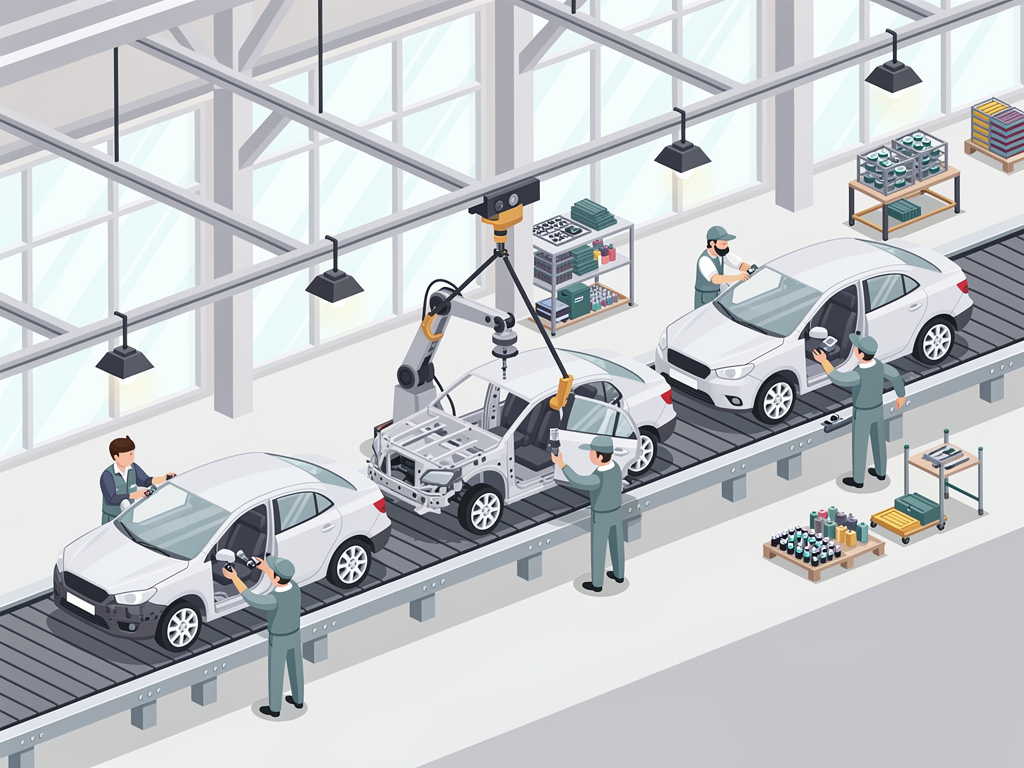
In 1913, Ford introduces the moving assembly line at Highland Park.
Core principles:
1. Break work into tiny, repeatable tasks
2. Move product to workers, not workers to product
3. Standardize tools and motions
Result: Assembly time for a Model T falls from ~12 hours to ~90 minutes, slashing costs and enabling mass production.
The Five-Dollar Day
In 1914, Ford doubles typical wages to $5 per day.
Effects:
- Attracts and retains workers for monotonous line work
- Reduces turnover and training costs
- Helps create a consumer class that can buy the cars they build
This policy illustrates Ford’s belief in high wages + low prices as a reinforcing system of mass production and mass consumption.
💡 This is just Chapter 1. The full content with all chapters, interactive quizzes, and progress tracking is available in the Octo AI app.