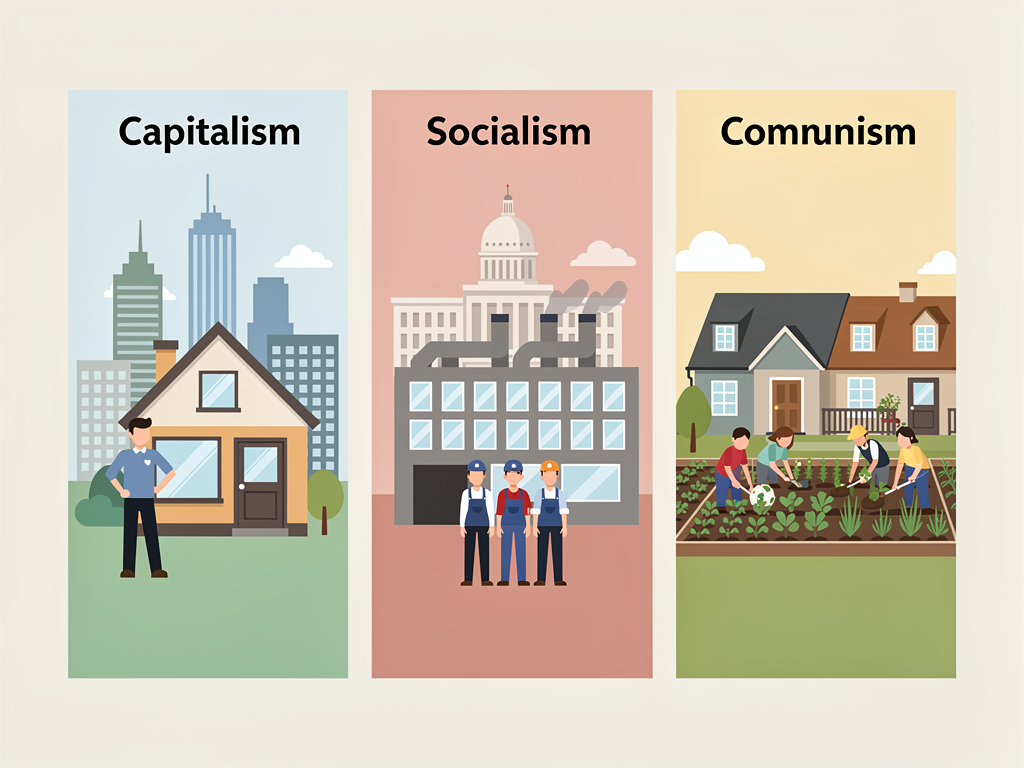
Both critique capitalism but differ in end goals and paths.
Socialism: social ownership of key resources; can coexist with markets and democracy
Communism: classless, stateless society; abolition of private property in production
Socialism is often seen as a stage or family of systems; communism as a final condition.
Key idea: Who owns productive assets, and how are decisions made about them?
Historical Roots
Socialist thought emerges in the early 19th century as industrial capitalism expands.
Key influences:
Early egalitarian movements
Enlightenment ideas of rights and reason
Working-class experiences of exploitation
Communism, especially in Marx’s sense, radicalizes these currents by insisting on revolutionary transformation of society, not mere reforms within capitalism.
Ownership and Control
Two key dimensions:
1. Ownership
Private (capitalism)
State or public (socialism)
Common/collective (communism’s ideal)
2. Control
Market allocation
State planning
Democratic self-management
Systems are hybrids: many so-called “socialist” states mix public ownership with markets; some capitalist economies include public sectors and welfare states.
Key Terms
Means of production: factories, land, machinery, infrastructure
Private property (in Marxist sense): ownership of means of production, not personal items
Class: groups defined by relation to production (owners vs. workers)
Exploitation: workers produce more value than they receive in wages; surplus accrues to owners
Knowing these lets you read socialist and communist texts with precision. 📚
💡 This is just Chapter 1. The full content with all chapters, interactive quizzes, and progress tracking is available in the Octo AI app.