Chapter 1: Coffee Basics & Extraction
What Is Brewing?
Brewing coffee means using water to pull flavors from ground beans.
Key ideas:
- Water dissolves tasty compounds
- Time, temperature, and grind control what gets extracted
Too little extraction = sour, thin
Too much extraction = bitter, harsh
Brewing is balancing these forces to hit the sweet spot. ☕
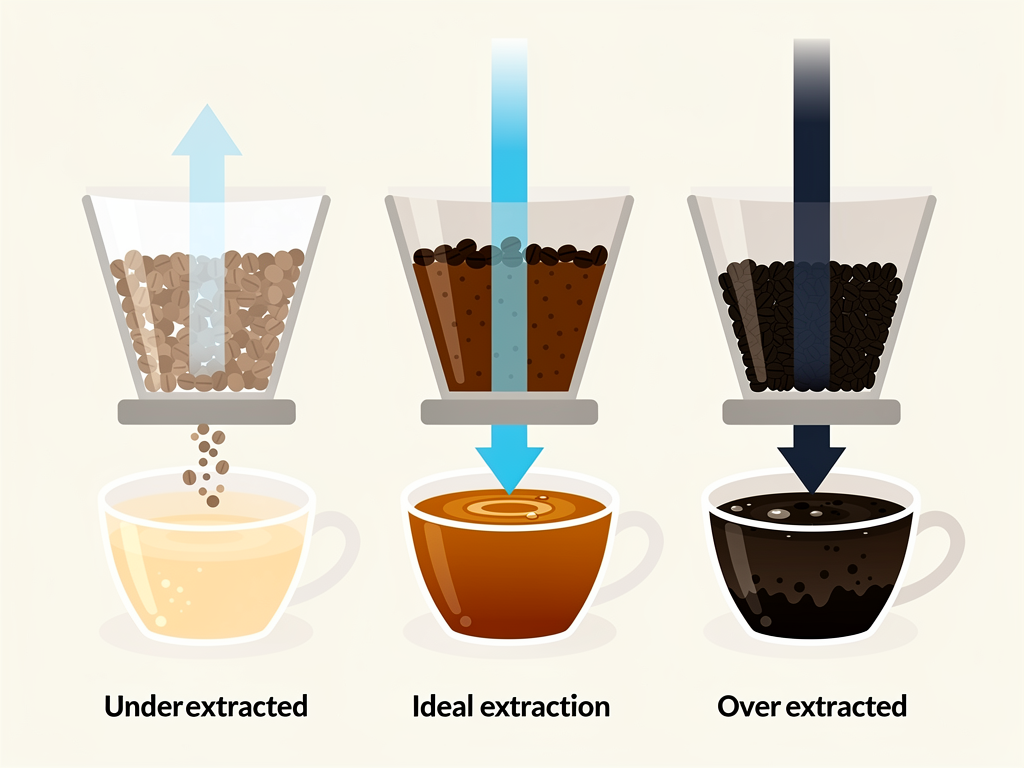
Extraction Range
Most good brews sit around 18–22% extraction (how much of the coffee mass dissolves).
You don’t need a lab, but understand:
- Lower extraction → lemony, salty, weak
- Higher extraction → woody, dry, bitter
Taste your cup and guess: under, ideal, or over? That feedback guides your adjustments.
The Brewing Triangle
Three main levers control taste:
- Grind size
- Brew time
- Water temperature
Change one, and you change extraction.
Rule of thumb:
- Finer, hotter, longer → more extraction
- Coarser, cooler, shorter → less extraction
You’ll use this triangle in every method.
Strength vs Extraction
Don’t mix these up:
- Strength = how concentrated the drink feels (light vs strong)
- Extraction = how completely flavors are pulled from the grounds
A coffee can be:
- Strong and under-extracted (intense but sour)
- Weak and over-extracted (watery yet bitter)
You adjust ratio for strength, triangle for extraction.
Coffee-to-Water Ratio
The ratio sets strength:
- Common starting point: 1:15–1:17 (1 g coffee to 15–17 g water)
Examples:
- 15 g coffee → ~250 g water (1:16.7)
- 20 g coffee → ~320 g water
Higher ratio (1:18) → lighter
Lower ratio (1:14) → heavier, more intense
Always measure with a scale for consistency. ⚖️
💡 This is just Chapter 1. The full content with all chapters, interactive quizzes, and progress tracking is available in the Octo AI app.