Chapter 1: Foundations of Capitalism
What Is Capitalism?
Capitalism is an economic system where most resources and businesses are privately owned.
Key features:
- Markets allocate goods and services
- Prices signal scarcity and demand
- Profit motivates production
> In capitalism, investment decisions are mainly made by private actors, not governments.
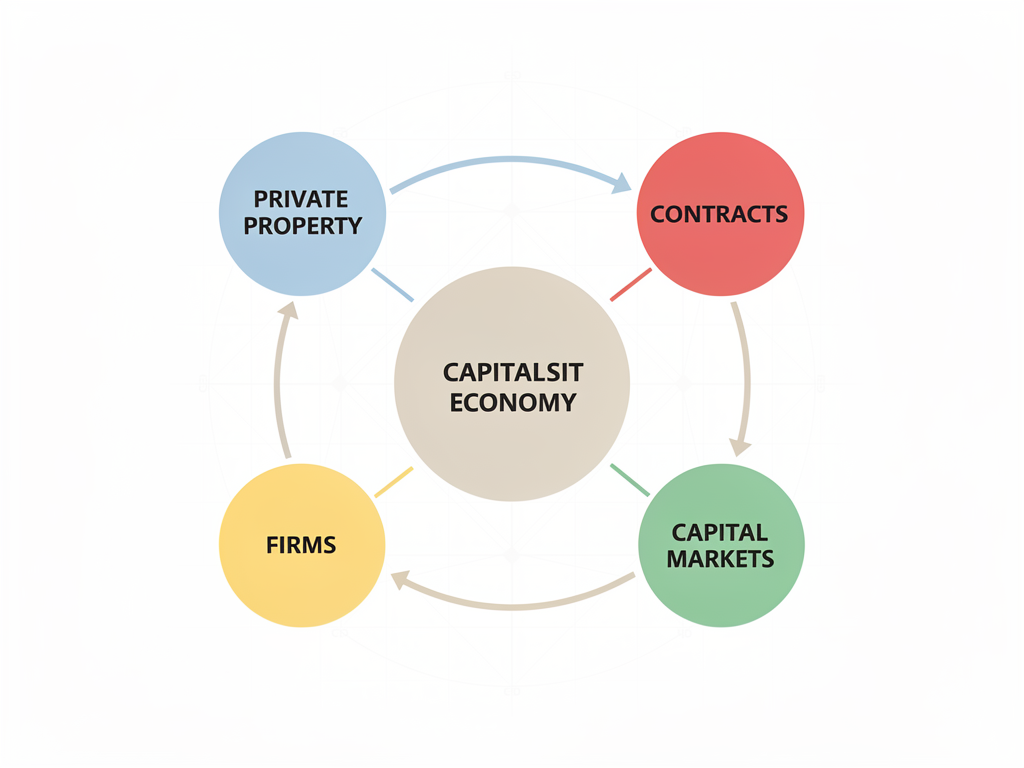
Core Institutions 🧩
Capitalism rests on several institutions:
- Private property: legal right to own, use, and sell assets
- Contracts: enforceable agreements
- Firms: organizations combining labor, capital, and technology
- Capital markets: channels for saving and investment
Without these, capitalist markets cannot operate effectively.
Labor, Capital, and Wages
In capitalism:
- Households supply labor and savings
- Firms demand labor and borrow savings as capital
- Wages and interest rates emerge from market interaction
Labor is treated as a commodity: it is bought and sold, which raises deep ethical and political debates.
Varieties of Capitalism
Capitalism is not monolithic:
- Laissez-faire: minimal state, strong markets
- Social market: markets plus robust welfare state
- State-led: strong industrial policy, mixed ownership
Every real-world economy blends market coordination with state intervention to some degree.
💡 This is just Chapter 1. The full content with all chapters, interactive quizzes, and progress tracking is available in the Octo AI app.