Chapter 1: What Is the 737 MAX?
Meet the Boeing 737 MAX
The 737 MAX is a single-aisle jet used mostly on short and medium flights.
Key Features
- New LEAP-1B engines (larger, more efficient)
- Updated winglets to reduce drag
- Modern glass cockpit with large screens
Airlines like it because it:
- Burns less fuel
- Carries many passengers
- Fits existing airport gates
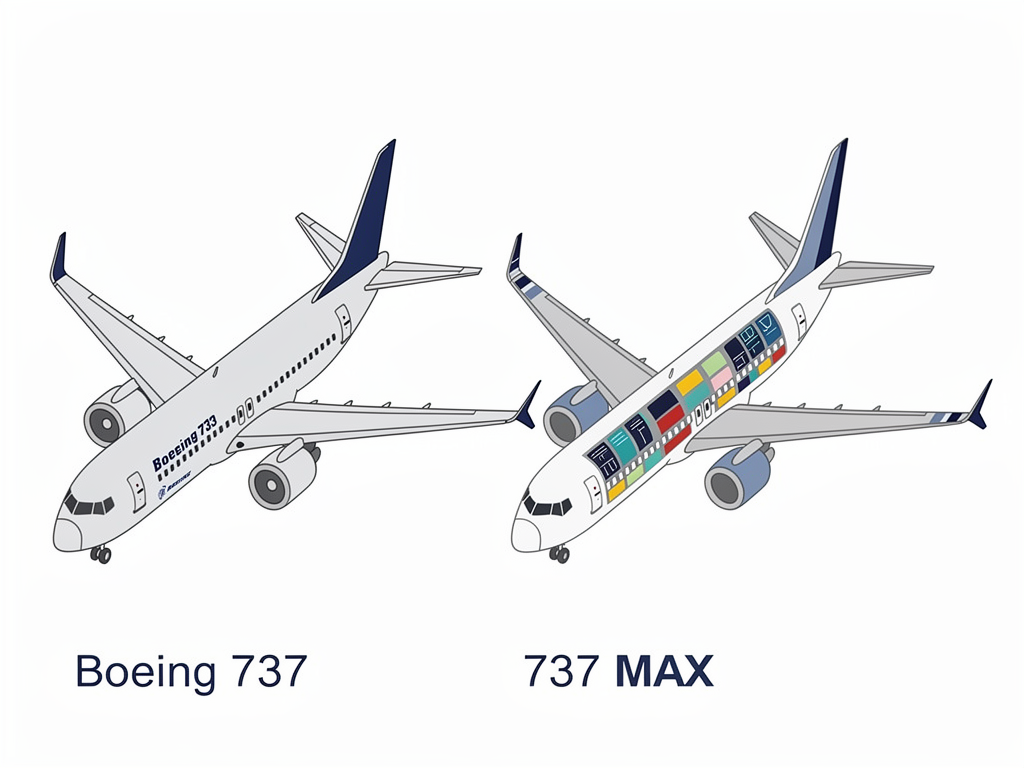
Place in the Boeing Family
Think of the 737 MAX as the latest generation of a long-running car model.
- First 737 flew in 1967
- Many versions: 737-100, -200, Classic, NG, then MAX
The MAX competes with the Airbus A320neo family. Both focus on:
- Lower fuel burn
- Quieter cabins
- Lower operating cost per seat
Main Variants
There are several 737 MAX models, sized for different route needs:
- MAX 7: smallest, fewer seats, longer range
- MAX 8: most common, balanced size and range
- MAX 9: stretched, more seats
- MAX 10: planned longest version
They share many systems, so pilots can switch between them with less extra training.
Why Airlines Care
For airlines, tiny improvements matter.
The 737 MAX promises:
- Around 10–15% better fuel efficiency than older 737s
- Lower CO₂ emissions per passenger
- Similar maintenance processes to the 737 NG
This means airlines can save millions of dollars while using crews and equipment they already have.
💡 This is just Chapter 1. The full content with all chapters, interactive quizzes, and progress tracking is available in the Octo AI app.