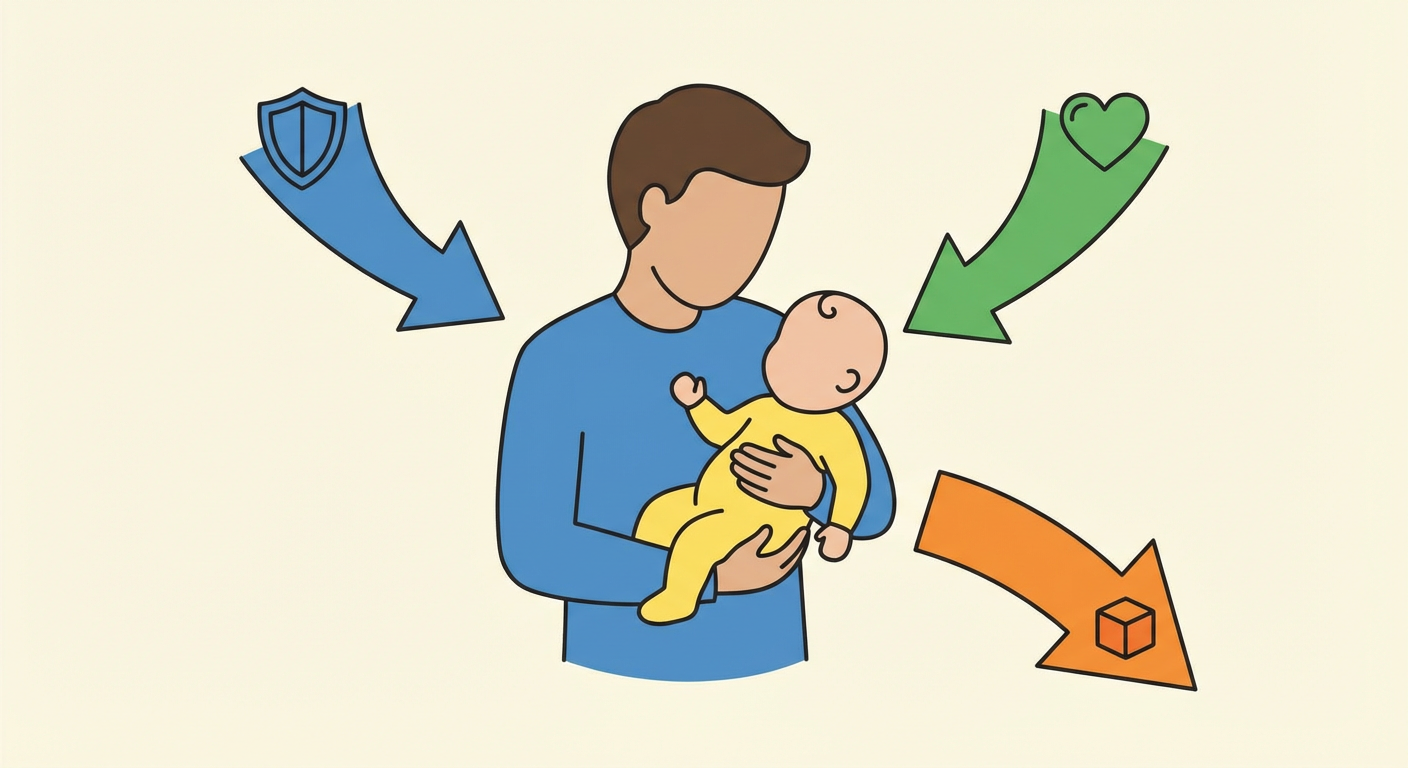
Attachment is the deep emotional bond a child forms with caregivers.
Key ideas:
It shapes how safe we feel with others
It guides how we handle closeness and separation
Early patterns often echo in adult relationships
> Attachment is about felt safety: "Are you there for me when I need you?"
Origins of Attachment Theory
Attachment theory comes from psychologist John Bowlby and researcher Mary Ainsworth.
They noticed:
Babies protest when caregivers leave
They calm faster with familiar adults
Early caregiving patterns predict later behavior
Their research showed attachment is a basic survival system, not "neediness". It helps children stay close to protection while learning to explore.
The Attachment System in Action
Think of the attachment system like an internal alarm + GPS.
When we feel safe: we explore and are curious
When we feel threatened: we seek closeness
When comforted: the alarm quiets and we can think clearly again
Over time, repeated experiences teach the brain: "People are (or aren’t) there for me."
Internal Working Models
Attachment experiences build mental "templates" called internal working models.
They answer questions like:
Am I lovable?
Are others reliable?
Is closeness safe or risky?
These models guide how we read faces, tone, and actions. They can be mostly secure or mostly insecure, and they strongly influence our later attachment style.
💡 This is just Chapter 1. The full content with all chapters, interactive quizzes, and progress tracking is available in the Octo AI app.