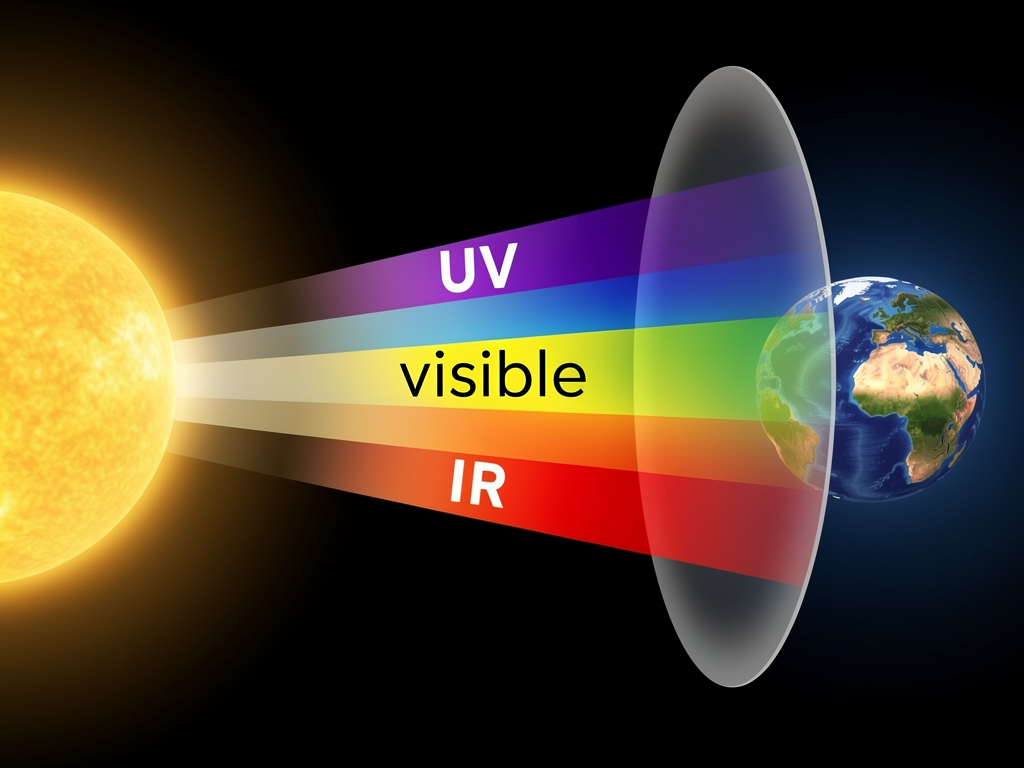
Solar energy is electromagnetic radiation emitted by the Sun, spanning:
Ultraviolet (UV)
Visible light
Infrared (IR)
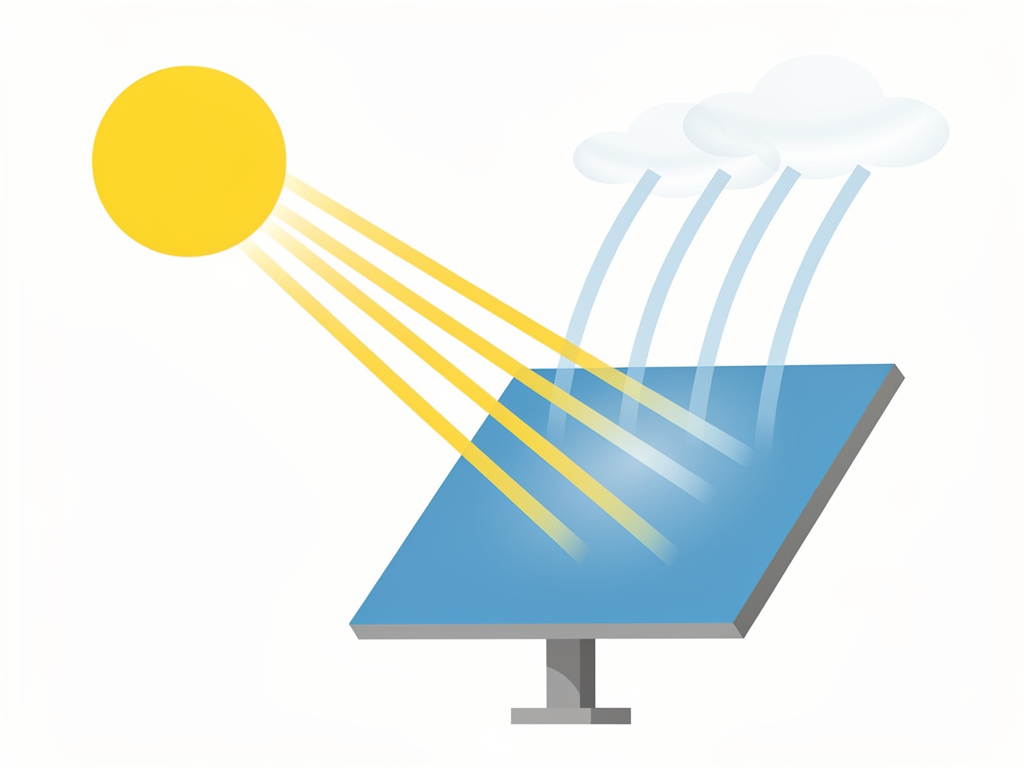
On Earth, average incoming solar power at the top of the atmosphere is about 1361 W/m² (solar constant). Only a fraction reaches the surface due to reflection and absorption by clouds, aerosols, and gases.
Key idea: Solar energy is abundant yet dilute, requiring large collection areas.
Solar Resource at the Surface
Two key measures:
Irradiance (W/m²): Instantaneous power per area
Irradiation (Wh/m²): Energy per area over time
Types of sunlight:
Direct beam: unscattered rays
Diffuse: scattered by atmosphere
Global: direct + diffuse on a tilted surface
Latitude, season, time of day, and clouds strongly affect available energy.
Spectral Distribution 🌈
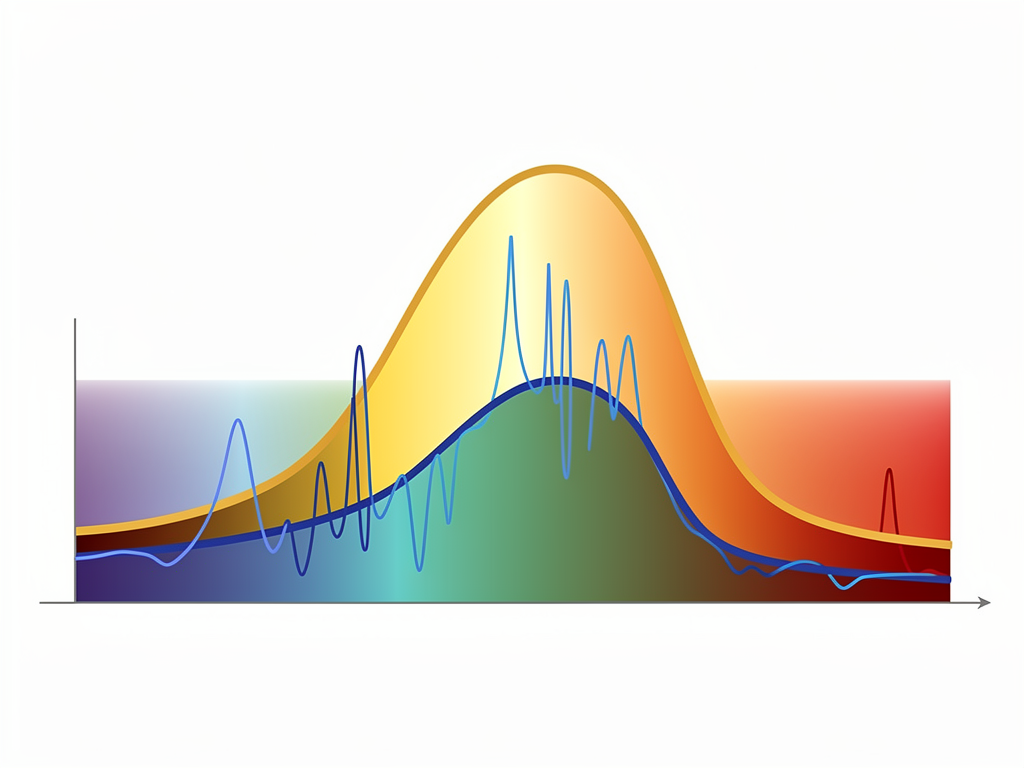
Solar radiation roughly follows a blackbody spectrum at ~5778 K, peaking in visible wavelengths. The atmosphere selectively absorbs certain bands (e.g., UV by ozone, IR by water vapor and CO₂).
Implications:
Solar cells are optimized for specific wavelength ranges
Atmospheric conditions change both intensity and spectrum
Designers match material bandgaps to the solar spectrum to maximize conversion.
Solar Geometry Basics
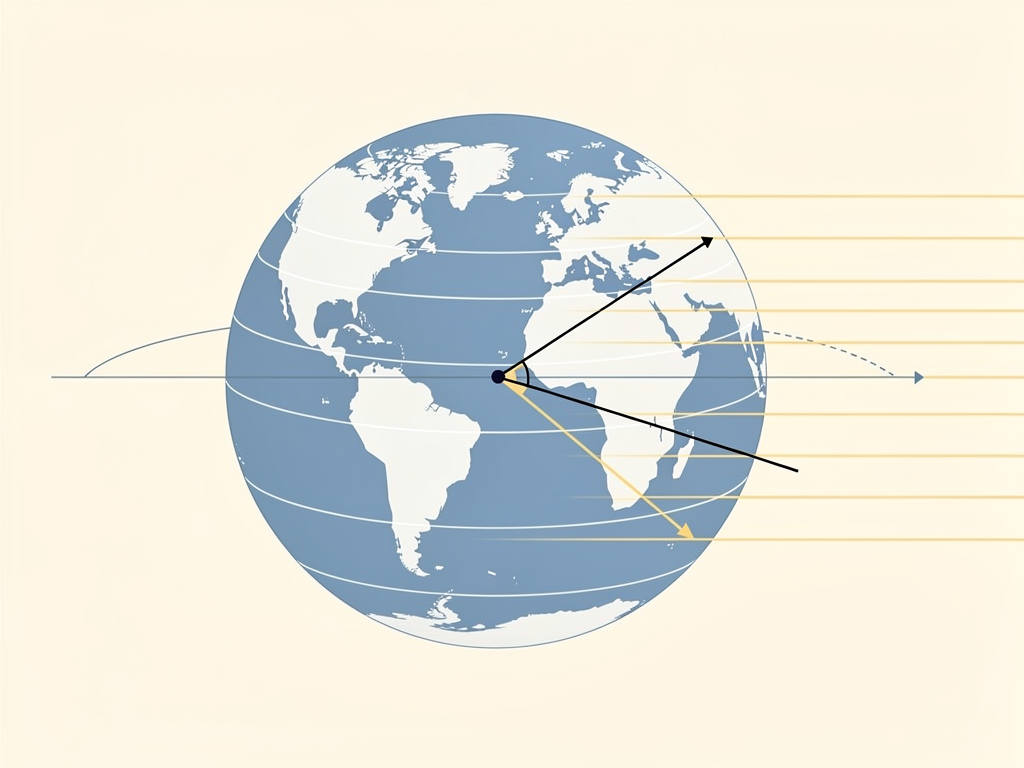
Key angles:
Latitude (φ)
Solar declination (δ): seasonal tilt
Hour angle (ω): time of day
Zenith angle (θz): Sun from vertical
Approximate relation:
cos θz ≈ sinφ sinδ + cosφ cosδ cosω
This determines irradiance on a horizontal surface and guides panel orientation.
💡 This is just Chapter 1. The full content with all chapters, interactive quizzes, and progress tracking is available in the Octo AI app.