Chapter 1: Core Concepts and Asset Classes
What Is Investing?
Investing means allocating capital today to earn future cash flows.
Key goals:
- Preserve purchasing power
- Grow wealth above inflation
- Transform savings into productive assets
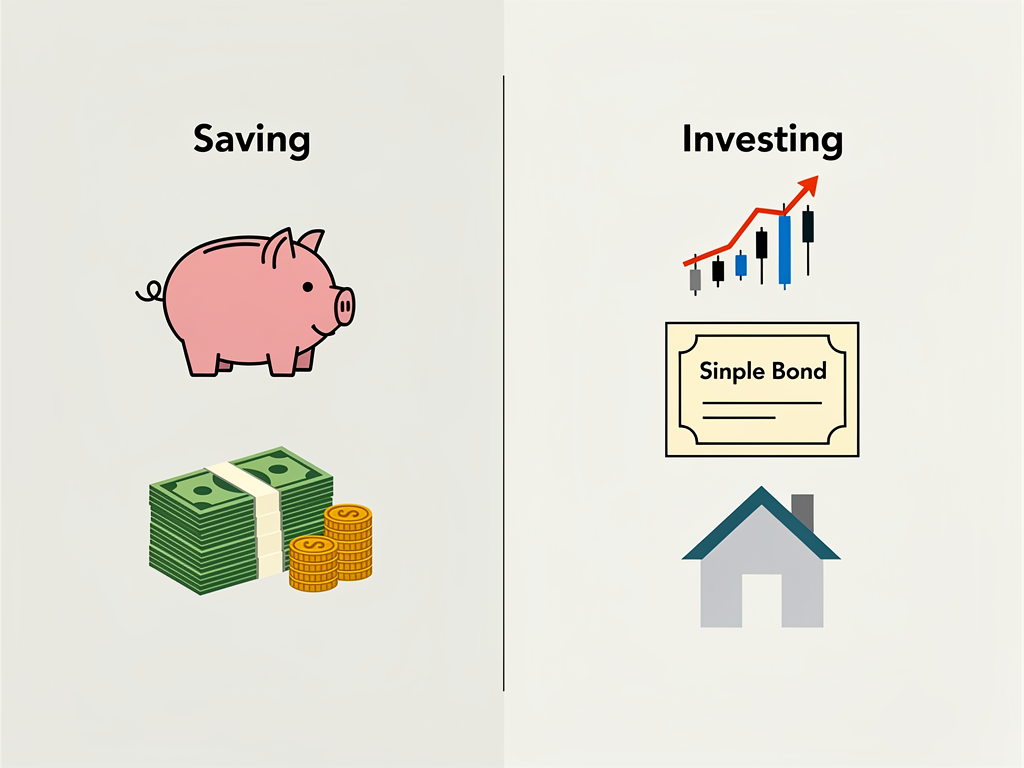
Investing differs from saving:
- Saving: safety, liquidity
- Investing: risk, return, time
> Investing always involves uncertainty. No return is guaranteed.
The Risk–Return Trade-Off ⚖️
Higher expected return usually requires higher risk.
Main risk types:
- Market risk: prices move together
- Credit risk: default
- Liquidity risk: can’t sell quickly
- Inflation risk: real value erodes
Your task is not to avoid risk, but to choose and price it intelligently.
Major Asset Classes
1. Equities (stocks) – ownership, high risk/return
2. Bonds – lending, lower risk/return
3. Cash & equivalents – low risk, low return
4. Real estate – physical or listed
5. Alternative assets – commodities, hedge funds, private equity, crypto
Each reacts differently to growth, inflation, and interest rates.
Equities: Ownership and Growth 📈
Buying a share means owning a fraction of a company.
Key drivers of value:
- Earnings growth
- Profit margins
- Reinvestment vs dividends
Short term: prices move with sentiment.
Long term: prices track fundamentals.
Bonds: Lending and Income
A bond is a loan to a government or company.
Key features:
- Face value
- Coupon rate
- Maturity
- Credit rating
When interest rates rise, existing bond prices typically fall.
> “Safe” bonds still carry inflation and interest‑rate risk.
Real and Alternative Assets
Real estate offers rent and potential appreciation.
Commodities (e.g., gold, oil): often hedge inflation, no cash flows.
Alternatives (private equity, hedge funds, venture capital):
- Complex
- Illiquid
- Often accessible via funds or institutions only.

💡 This is just Chapter 1. The full content with all chapters, interactive quizzes, and progress tracking is available in the Octo AI app.